it
it
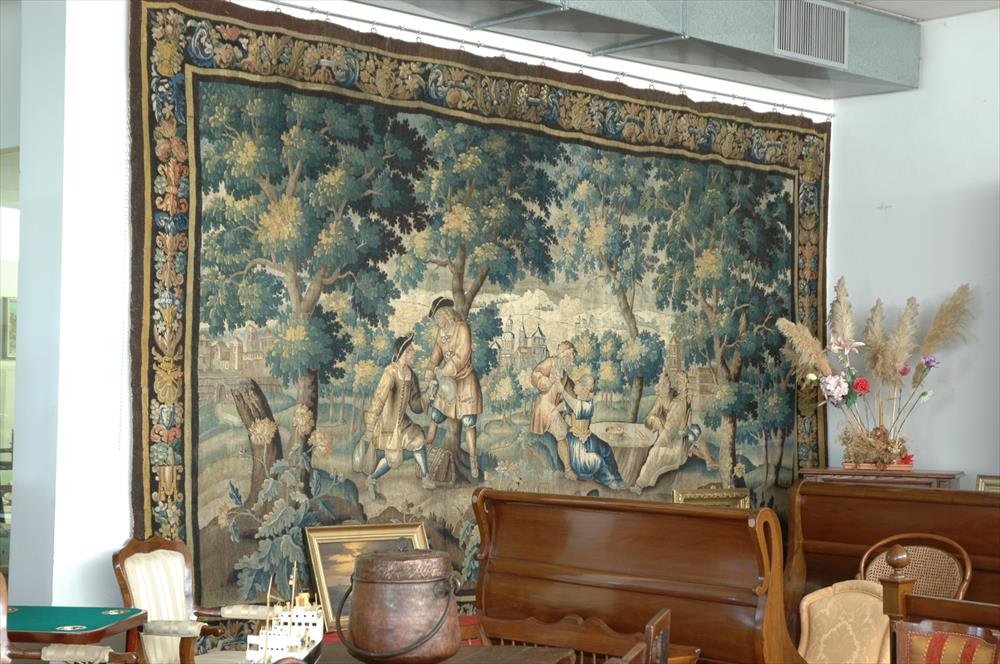
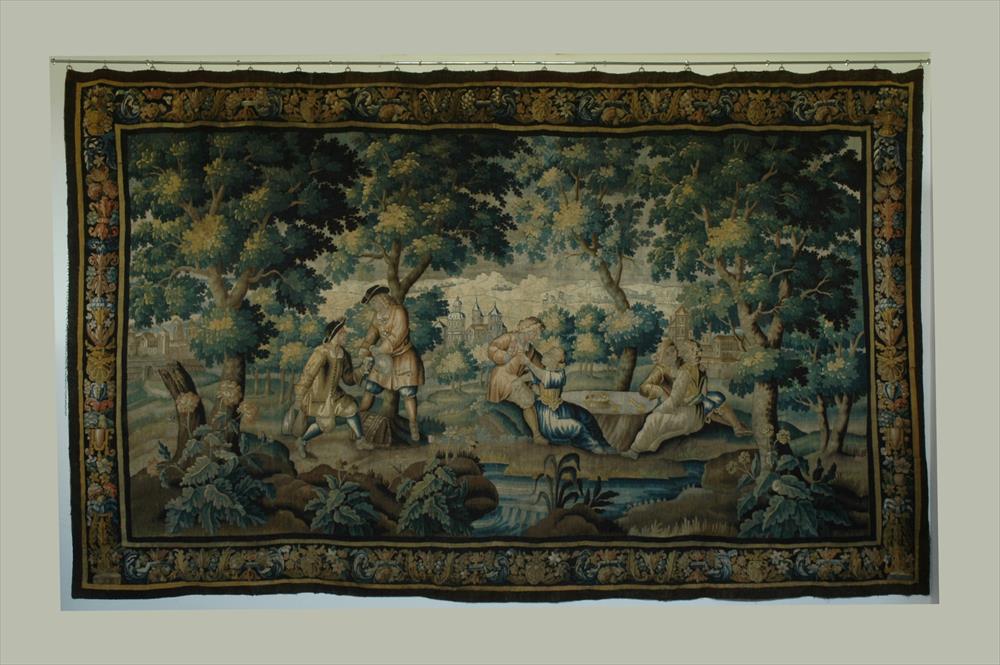
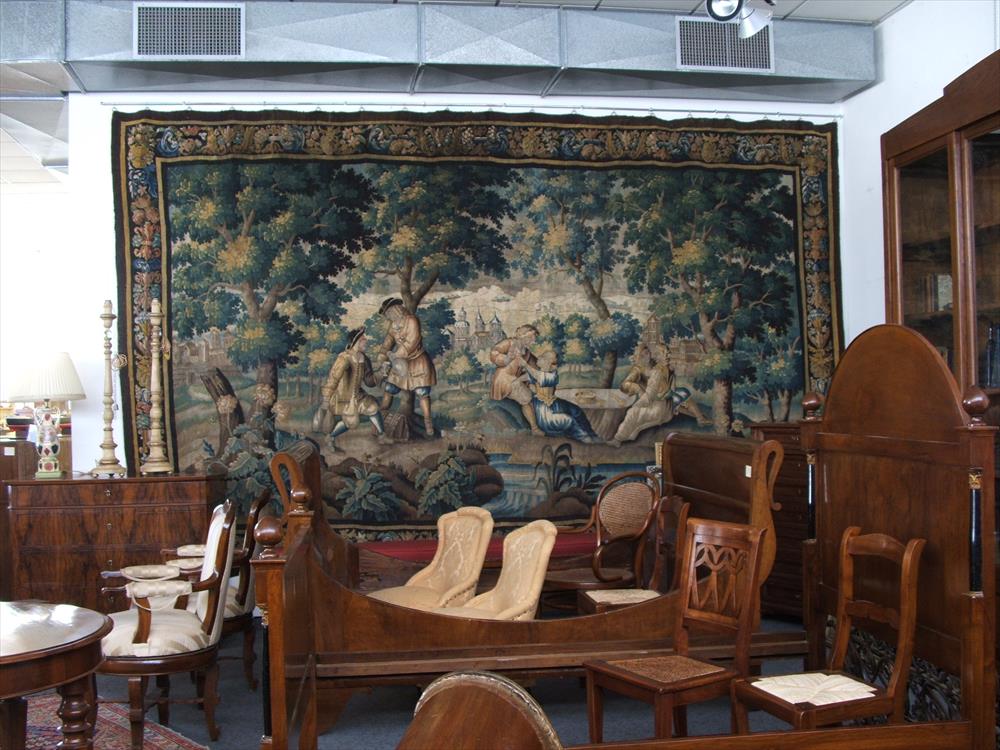
Important large-scale Aubusson tapestry, late 17th–early 18th century, depicting a gallant scene within a wooded landscape, characteristic of the verdures à personnages tradition.
Here, painting becomes textile, and textile becomes architecture. A work conceived to command space.
Produced in Aubusson during the transition from the reign of Louis XIV to the Regency, this tapestry belongs to a highly structured system of manufacture operating under royal protection. Designs were not improvised: they derived from full-scale cartoons prepared by specialized painters, translated into textile by coordinated workshops.
Wool and silk, spun, dyed, and woven by distinct hands, are brought together under the direction of a maître lissier. The process is slow, controlled, and cumulative. The image is built area by area, thread by thread.
Its scale—approaching five meters in width—defines its purpose. This is not decoration, but an architectural element. It insulates, absorbs, divides, and, above all, signifies. Such works functioned as markers of status within aristocratic interiors.
The composition is structured through successive tree screens, establishing depth and visual rhythm. Vegetation is handled as mass rather than ornament, evolving from traditional choux motifs into more articulated woodland forms. Figures are assured, neither rigid nor naïve, indicating a competent painterly source. Unlike more routine Aubusson production, this example retains a clear pictorial ambition.
The palette is restrained. Blues, greens, and browns shift gradually through natural dye processes, with silk highlights introducing light. The surface remains legible at distance, as intended.
The border, differing in handling and density, suggests a later addition. The floral garland scheme, in a Flemish taste, aligns with the historical practice of reusing or adapting high-quality borders to suit new settings. It adds, rather than detracts, from the object’s historical complexity.
Condition is sound. The integrity of the design and the stability of the wooded passages indicate careful preservation over time.
It continues to perform its original role. It structures space, introduces depth, and anchors the room. It does not depend on historical context; it holds its own within contemporary interiors.
A rare and substantial work, capable of defining an entire environment.
- Material: Wool warp, wool and silk weft
- Size: cm 480 x 290
- Condition: Restored
- Period: Late 17th century /Early 18th century
- Style: Louis XIV
- State: Optimal conditions