it
it
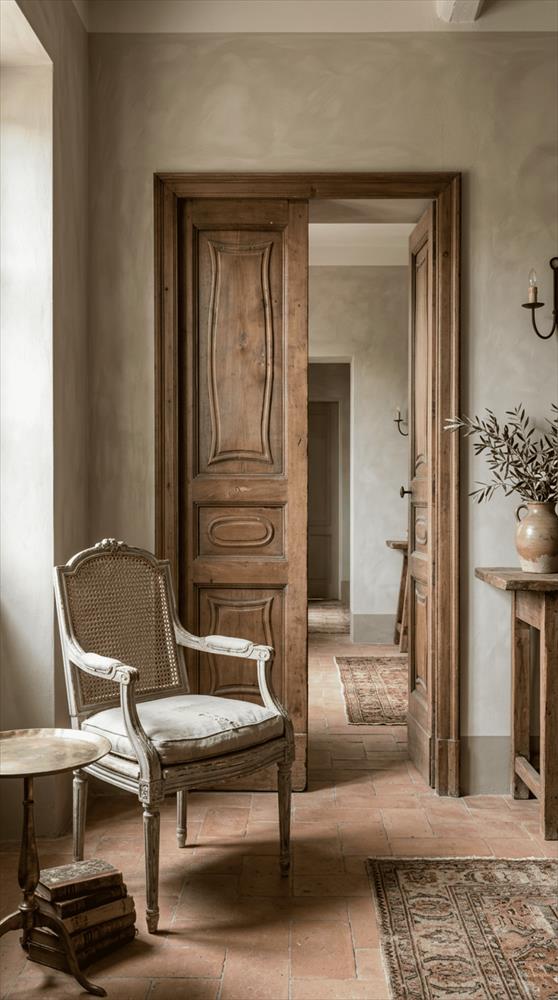
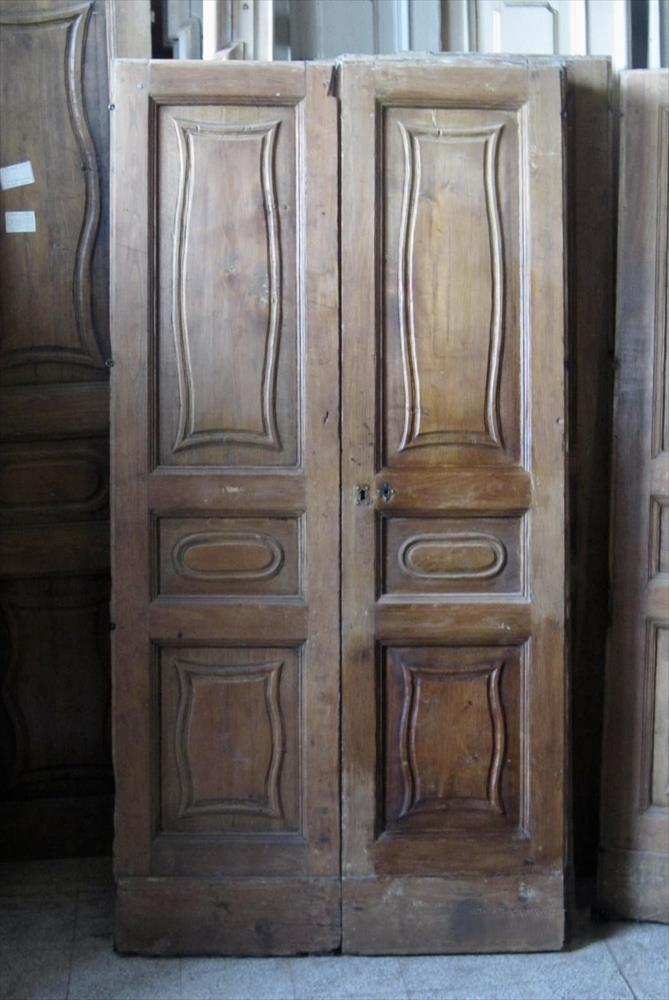
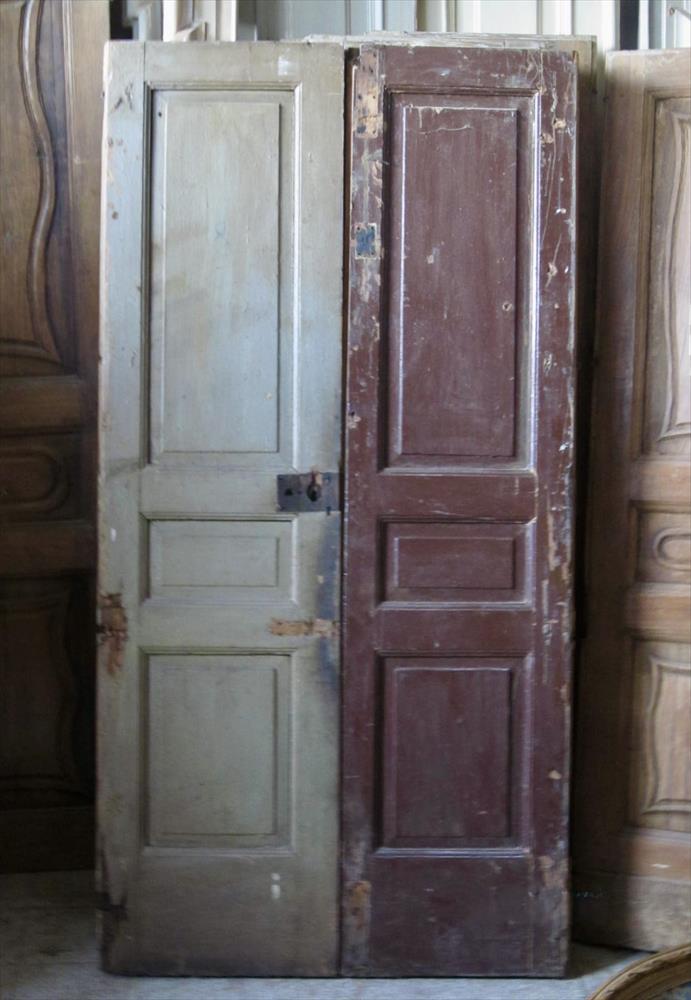
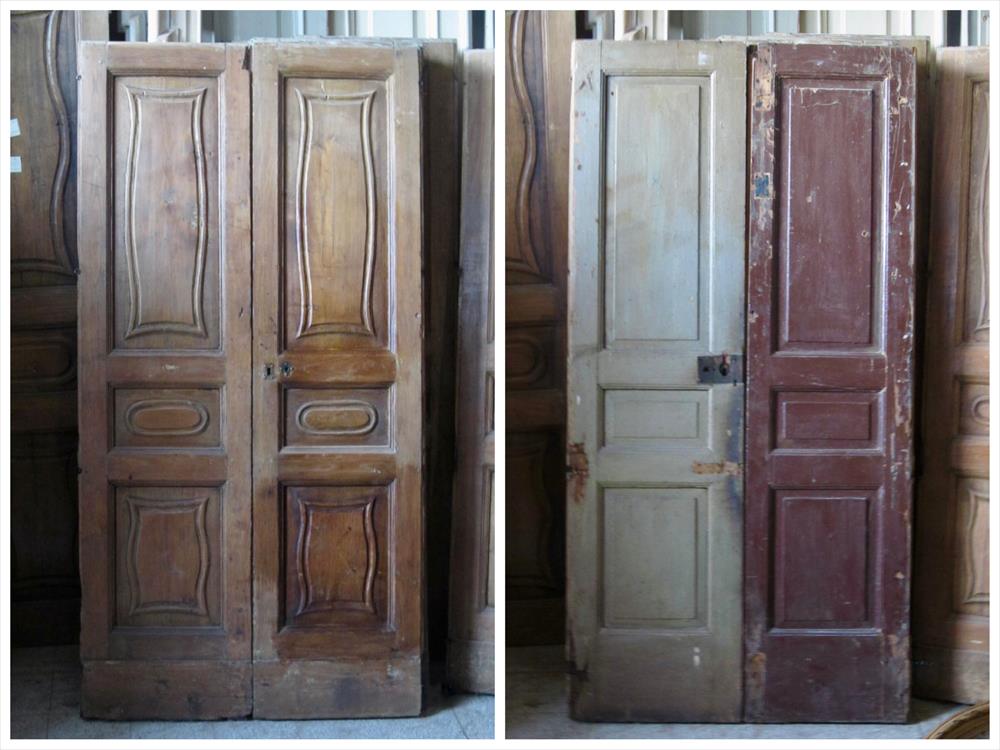
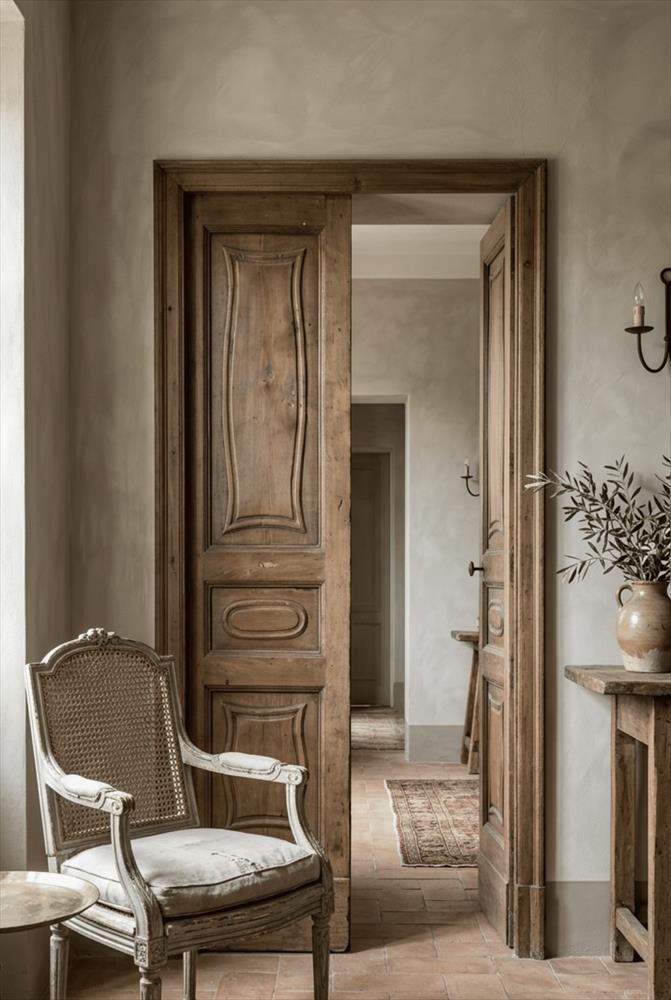
Antique internal double-leaf doors in solid chestnut, Tuscany (Chianti area), mid‑18th century. Panelled on both sides: shaped panels on the front, raised panels on the back. Original set of four doors, never restored – each approx. 120 × 230 cm (h).
This set of four doors has come down to us complete. After nearly three centuries, they still share the same design, proportions and dimensions: today they allow something increasingly hard to achieve—giving an entire home continuity through elements that were born together. The fact that the set has remained intact is already part of its story.
They come from a Chianti residence of the mid‑1700s. They are neither aristocratic nor rural: they belong to that Tuscan “civil” joinery that sought balance rather than display. Here quality lies in restraint—proportions, mouldings, and control of the whole.
They are made of solid chestnut: in Tuscany it was the wood chosen for elements meant to last, stable, resilient and naturally rich in tannins. That, too, is why these doors remain structurally sound after almost three centuries.
The truly rare feature is the finished treatment on both faces. A joiner would not give the same care to two sides of a door if one of them did not matter: here, both sides matter. The front is articulated by shaped panels; the back has a full raised-panel layout, built with the same seriousness. This is how one understands that these doors connected rooms of equal standing, not service spaces.
Over the centuries they were repainted several times. Each new coat was maintenance, not an attempt to change their style; unintentionally, it also helped protect the chestnut, which today retains healthy substance and a colour matured by time. The doors are original and never restored: an ideal basis for a respectful conservation restoration.
With proper conservation work and a custom-made frame, they can return to doing their job exactly like a contemporary door. The difference is that a new door is made in series; these were conceived and finished one by one, and they have already proved—over nearly three centuries—the quality of their making.
They are not “identical”: they are coherent. And it is precisely this coherence that gives unity to the rooms.
One antique door can change a room. Four doors born together can change the identity of an entire house.
- Material: Solid chestnut wood
- Size: Cm 120 x 230 (h)
- Condition: Tobe restored
- Period: Prima metà del '700
- State: Good conditions