it
it
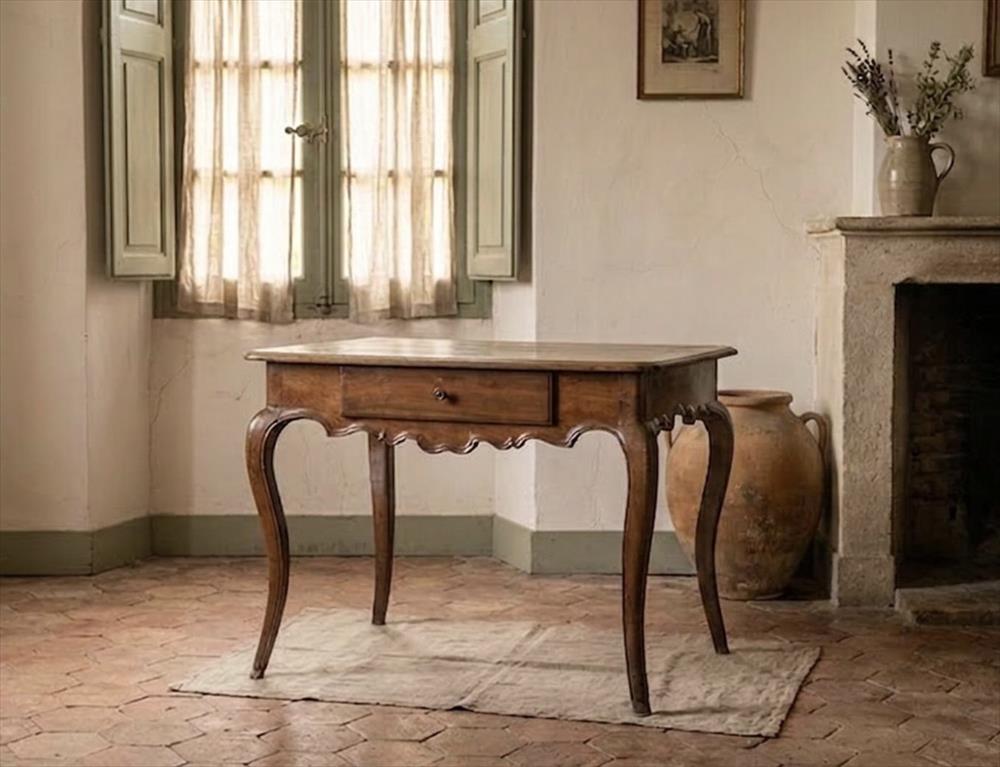
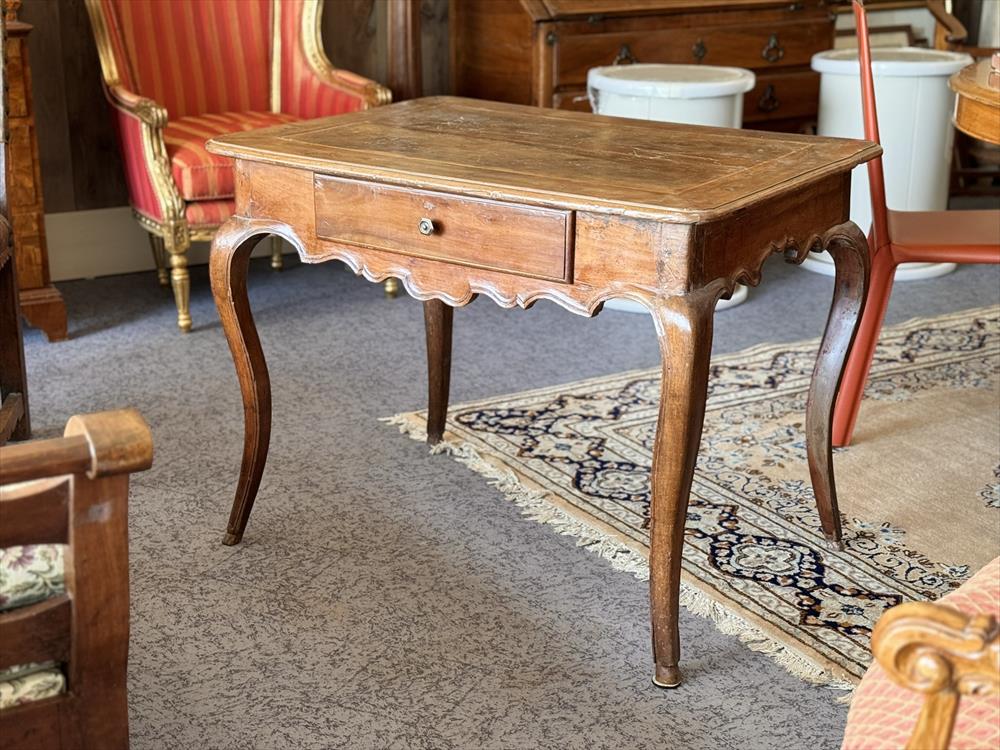
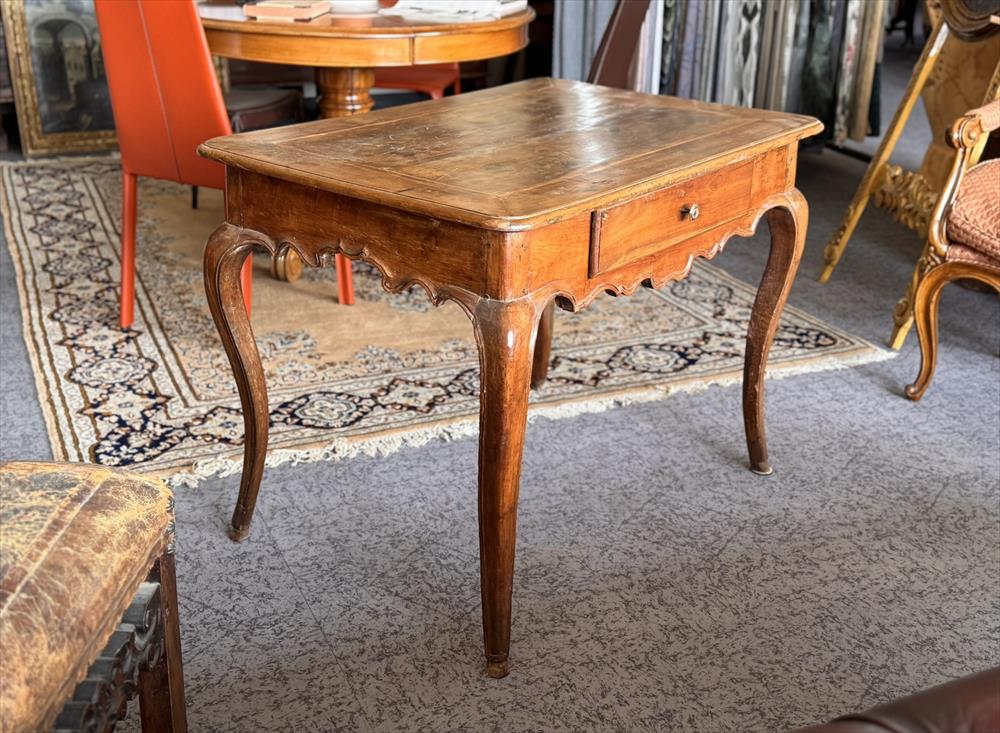
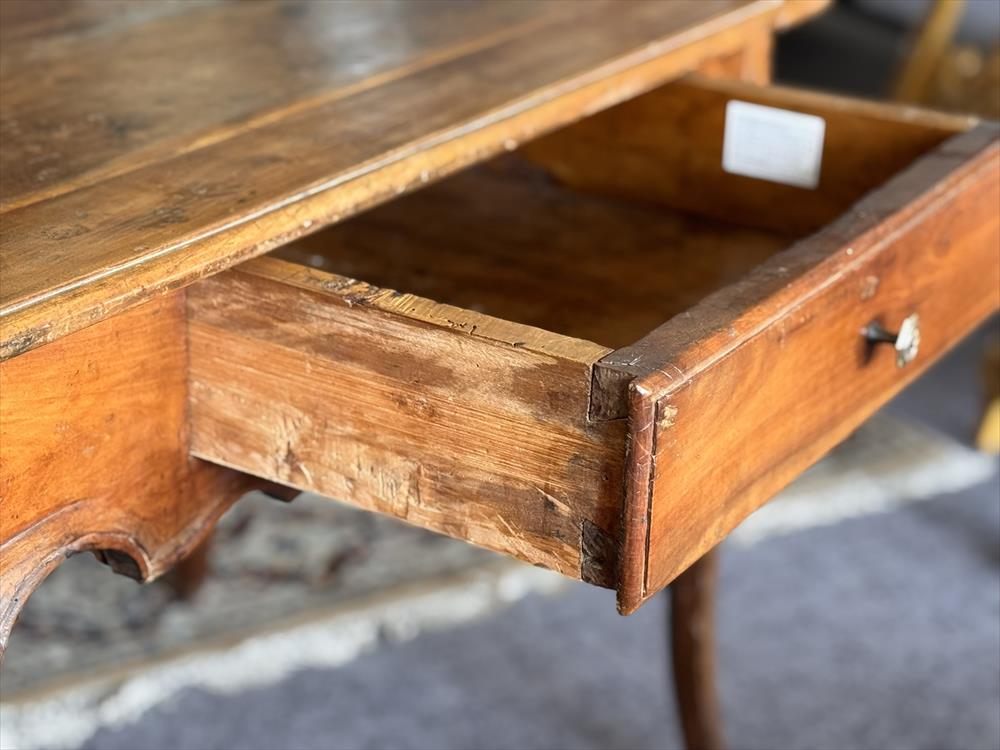
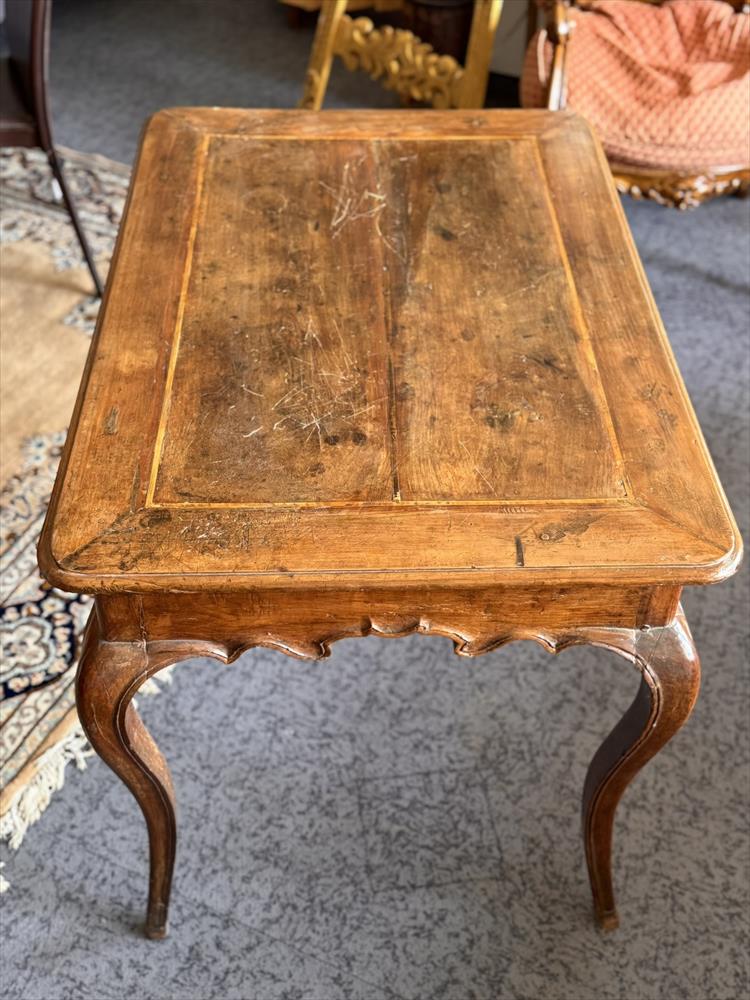
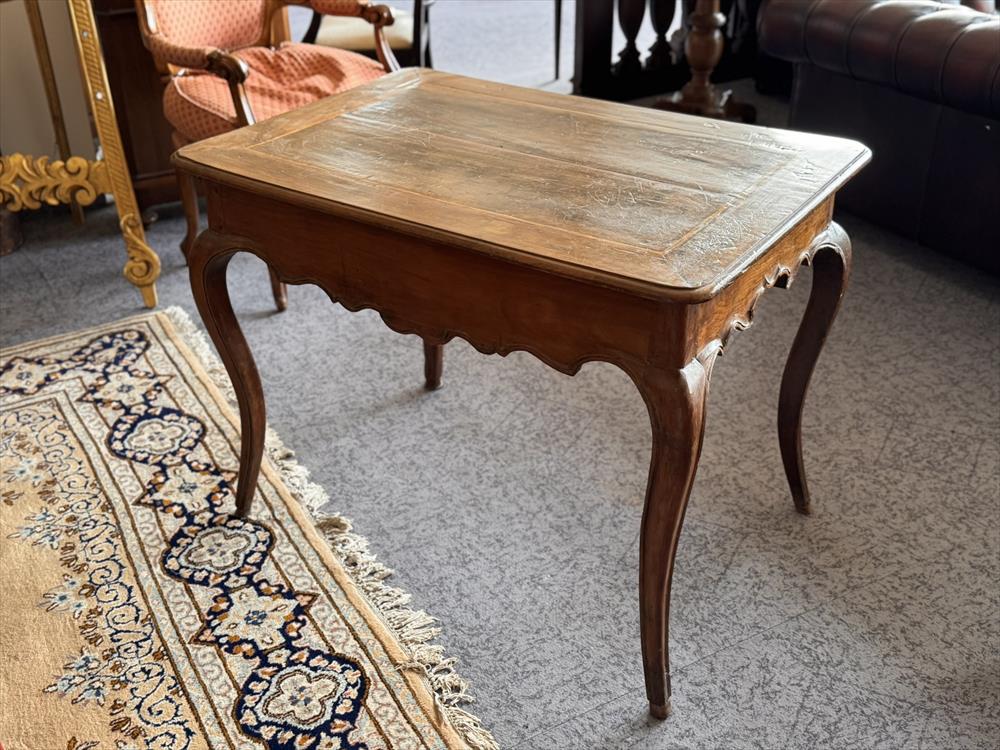
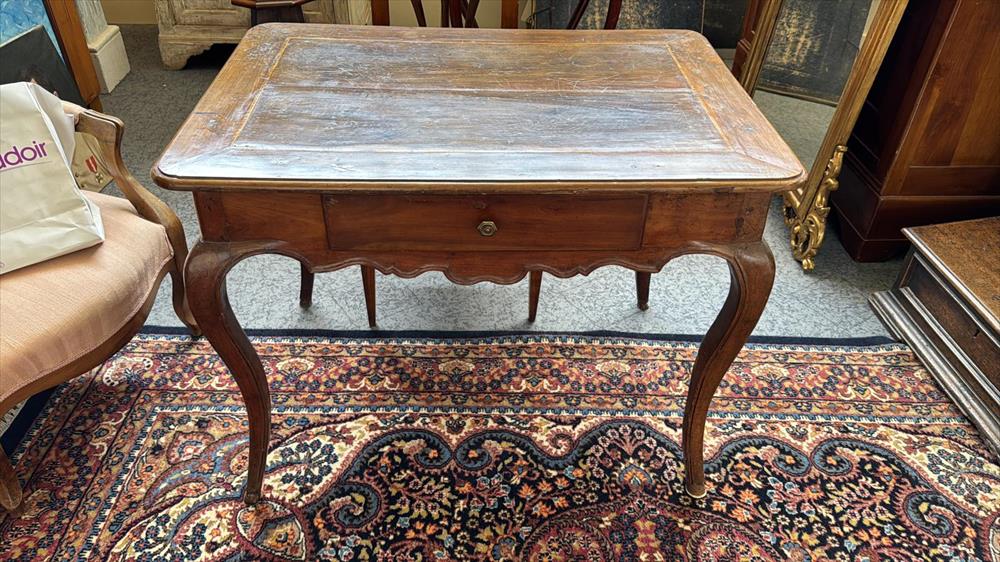
A small 18th century Provençal table in solid walnut: well-built, gently shaped, meant to be lived with rather than simply displayed.
This French provincial side table dates from the heart of the 18th century, when furniture in Provence was still made with confidence, good timber and very little excess.
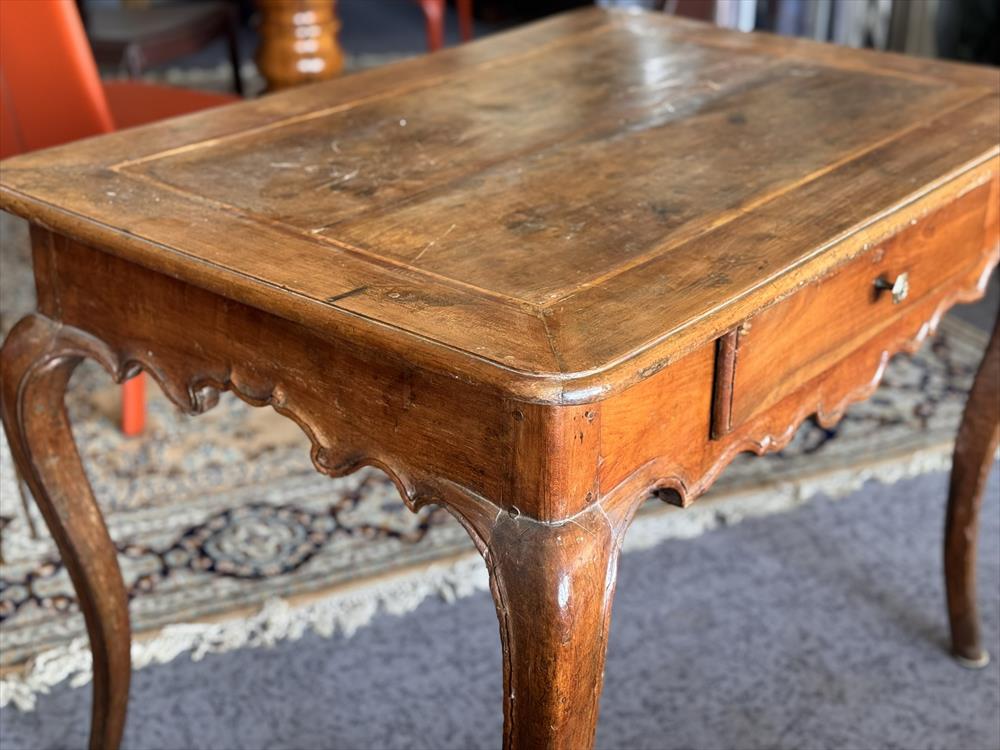
Built entirely in solid walnut, it has all the right elements of the Louis XV vocabulary without becoming overly decorative: a rectangular top framed by a fine boxwood inlay, a deeply shaped chantourné apron and four cabriole legs with a strong, natural curve. On the front, a single drawer made for everyday use.
What immediately sets it apart is that it is finished on the back as carefully as on the front.
This was never meant to be a wall table. It was designed to stand freely in a room, visible from every side, moved where needed and used as part of daily life.
The walnut tells much of the story.
This is the warm, compact walnut typical of good Southern French furniture: dense, stable and naturally rich in colour. The surface still carries the marks of time and use — scratches, oxidation, small stains, wear accumulated slowly over centuries. Not an over-restored piece, but a table that has genuinely lived, which is exactly why it still feels convincing today.
The construction is entirely traditional: mortise-and-tenon joinery, wooden pegs and a hand-dovetailed drawer. No shortcuts, no industrial logic. It is the kind of furniture built to survive generations of use.
The fine boxwood stringing around the top may seem like a small detail, but it changes the whole character of the table.
It brings order to the surface, lightens the visual weight of the walnut and pushes the piece beyond simple country carpentry into something more refined.
The legs also reveal the spirit of the piece well: curved and elegant, yet still solid, with a fullness at the shoulder that immediately suggests strength beneath the movement. This is provincial Louis XV at its best — less theatrical than Parisian furniture, more grounded, more domestic.
Originally, it was probably used as a writing table, reading table or light work table.
The single drawer suggests everyday personal use: letters, small tools, household papers, objects kept within reach. Furniture like this followed the rhythm of the house and was moved wherever it was needed.
The quality of the walnut, the boxwood inlay and the honest construction point to a provincial bourgeois or minor aristocratic commission — families looking for furniture that was elegant and durable, without unnecessary display.
Everything here is original, and it shows.
Today a table like this works almost anywhere: living room, hallway, study, between two chairs or as a small writing desk.
It does not create a “museum effect”. Instead, it brings real wood, human proportions and a history that does not need to be invented.
It is one of those pieces that become more convincing over time, because it is well made, genuinely lived-in and never tries to be something else.
They have survived time, earning the right to remain.
They carry memory and truth.
Our work is to recognize them and help them continue.
- Material: solid walnut wood
- Size: cm 89 x 66 x 75 h
- Condition: Restored
- Period: Mid-18th century
- Style: Louis XV
- State: Optimal conditions