A table made to bring people together.
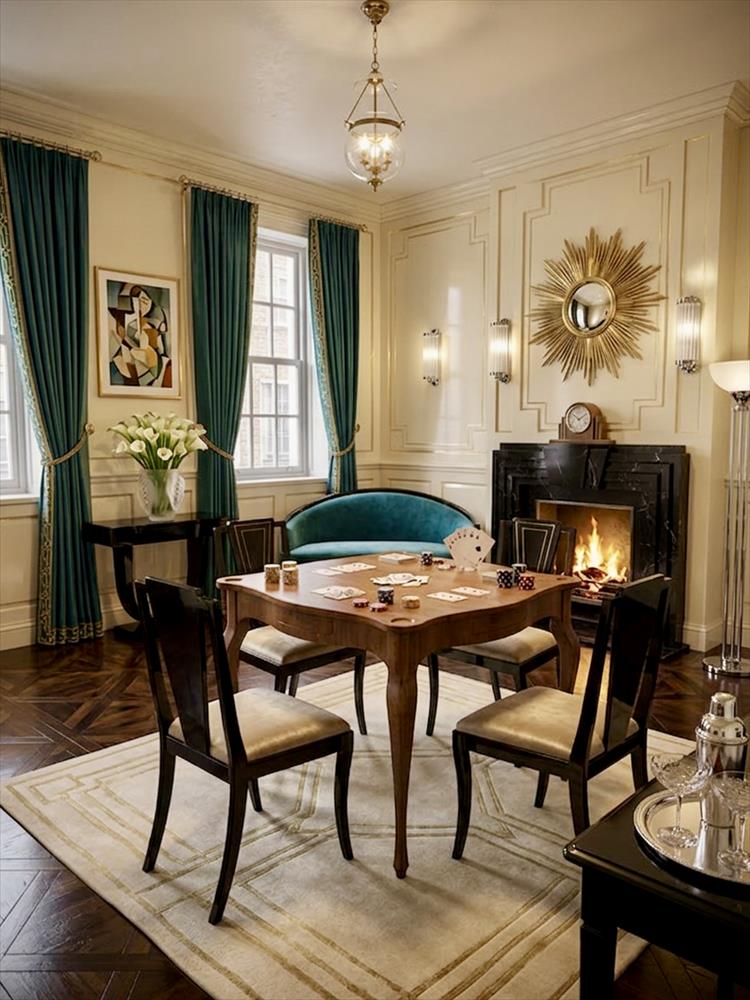
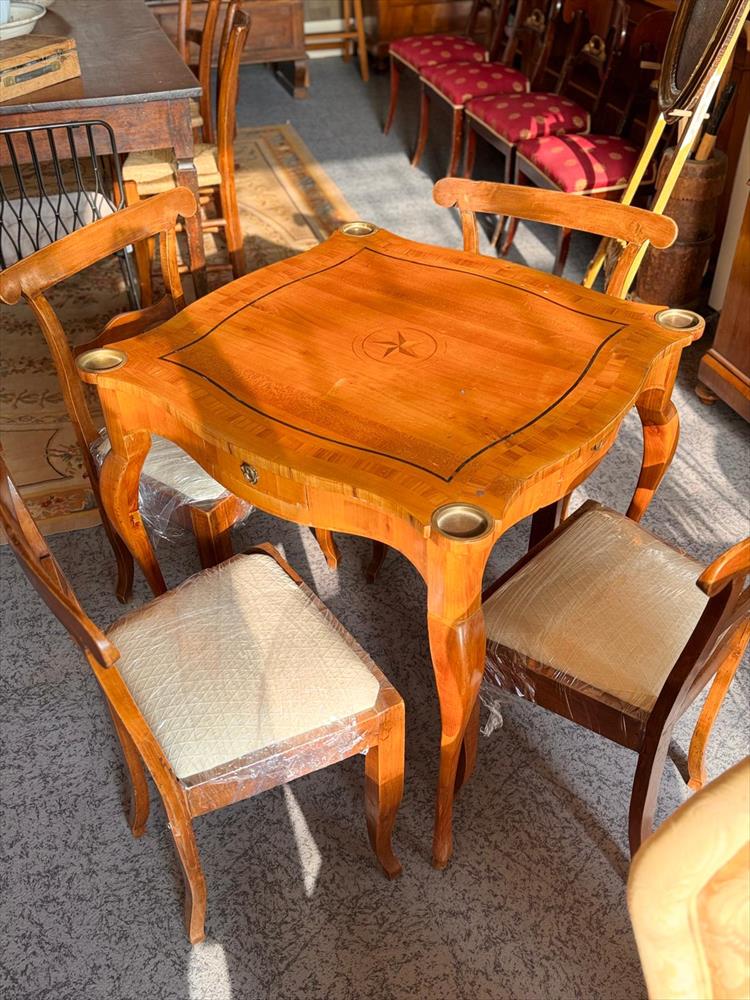
The four small brass inserts at the corners explain its purpose immediately: they were designed to hold candles during evening card games, lighting the playing surface without dripping wax onto the wood. A simple detail, but enough to place the table back into its original setting — conversation rooms, guests, cards, wine, time spent together.
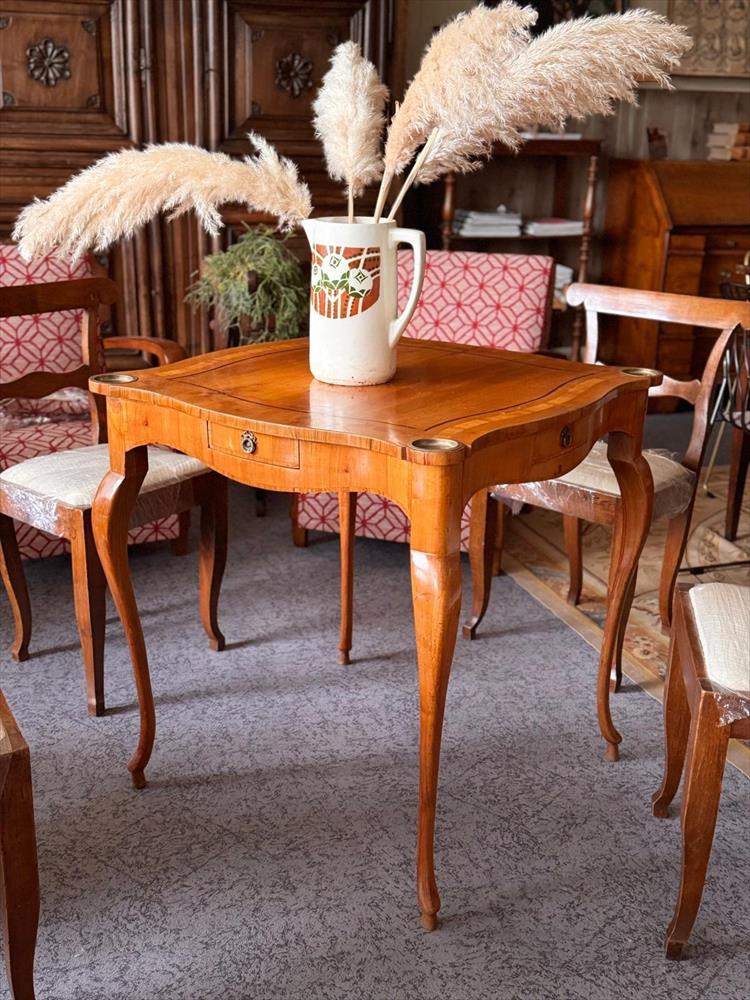
This is a Sienese gaming table from the second half of the 18th century, veneered in cherrywood, with bois de rose stringing and a central star inlay.
In the 1700s, gaming was more than entertainment.
Tables like this stood at the centre of social life: people gathered around them to play, talk, receive guests and spend long evenings together. In Tuscany, games such as Minchiate, Pharaoh and Basset were especially popular among aristocratic and upper-middle-class families.
The entire structure reflects that function.
Each side contains its own drawer, allowing every player to keep cards, counters, coins or personal items within reach. This was not decorative excess — the table was designed to be used from every side at once.
Even the cabriole legs have a practical role beyond style.
Their curved shape lightens the structure visually while leaving more freedom underneath the table, making it easier for players to sit close during long games.
The design belongs to the transitional period between Louis XV and early Louis XVI taste: the top still has movement, but the overall line is already more restrained and controlled, avoiding heavy ornament.
In Tuscany, cherrywood was often chosen for furniture of this kind.
Warmer and brighter than walnut, it ages gradually, developing deeper amber tones over time.
The surface still preserves the character of the wood and the patina created through use.
The central inlay and the fine stringing follow the shape of the top without overpowering it.
The restoration has been conservative: structural consolidation, light cleaning and traditional shellac polishing, carried out to revive the wood without masking it.
This is a piece built for a precise function, and that is exactly why it still feels relevant today.
Used as a centre table or placed between seating, it brings into a room something many contemporary interiors lack: an object with a real purpose, a recognisable history and a strong identity.
Not a generic occasional table.
Every detail still explains how it was meant to be used.
They have survived time, earning the right to remain.
They carry memory and truth.
Our work is to recognize them and help them continue.
 it
it