it
it
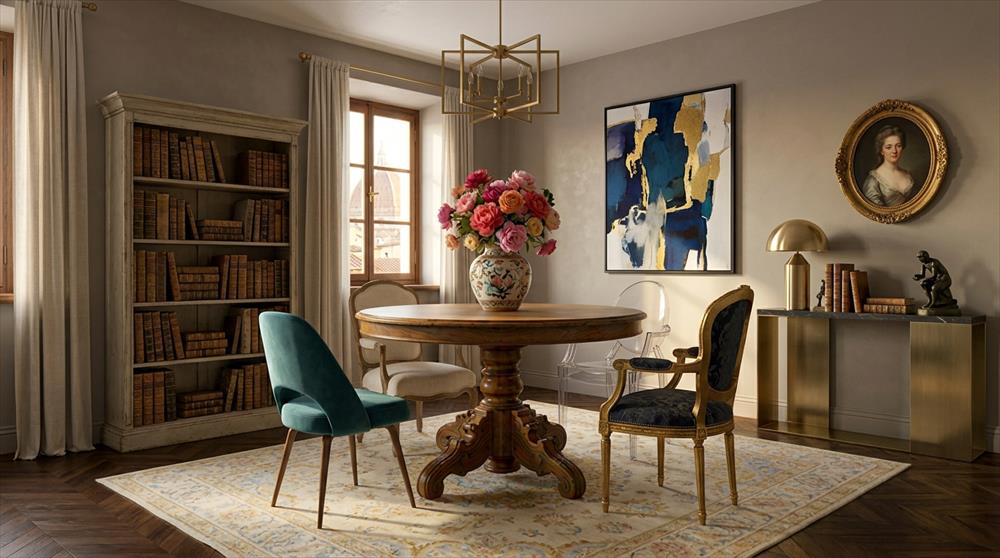
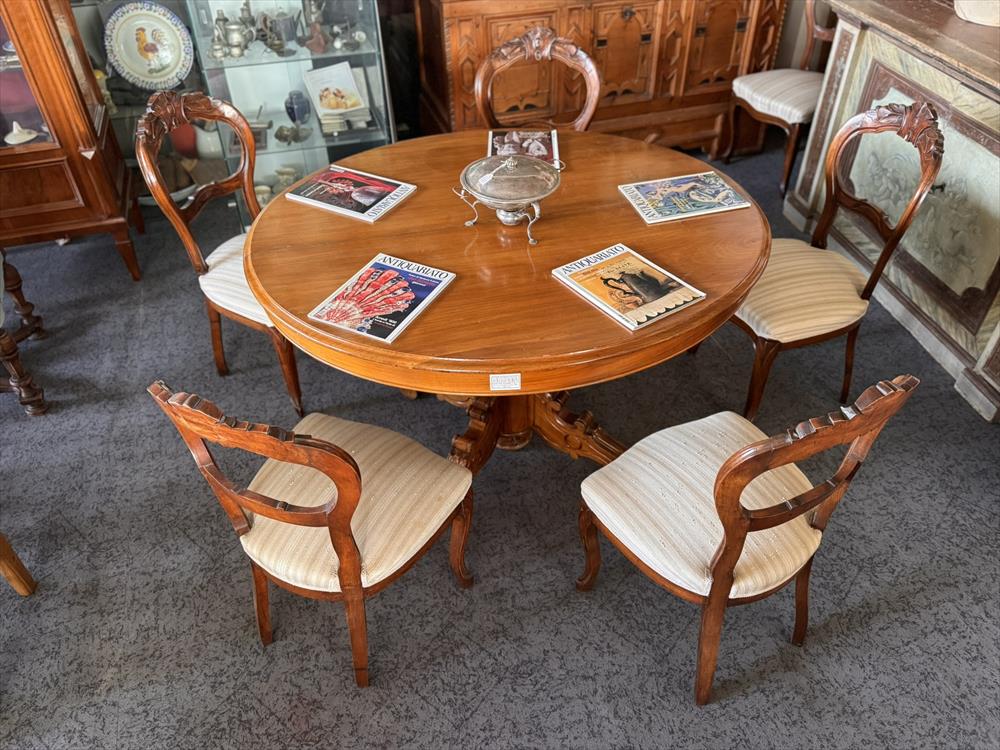
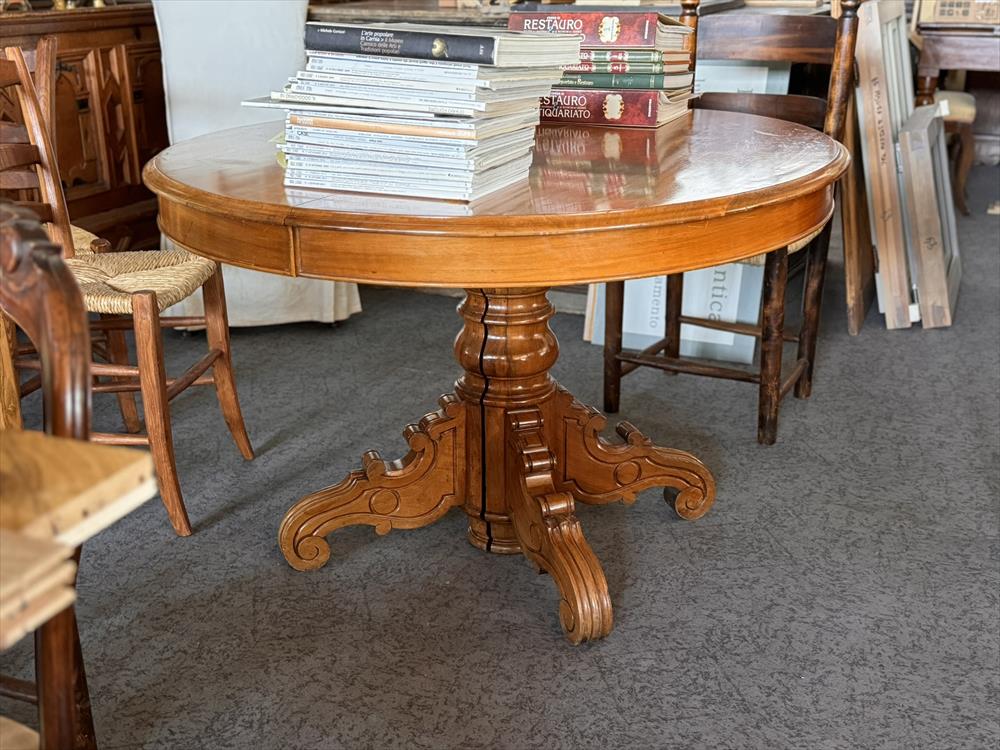
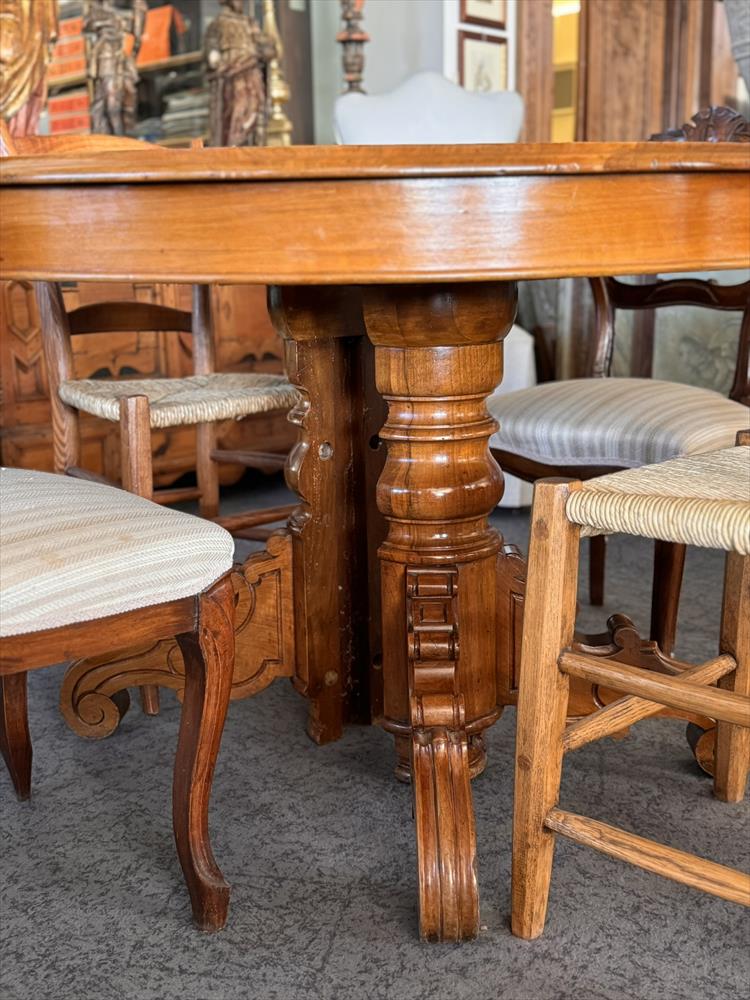
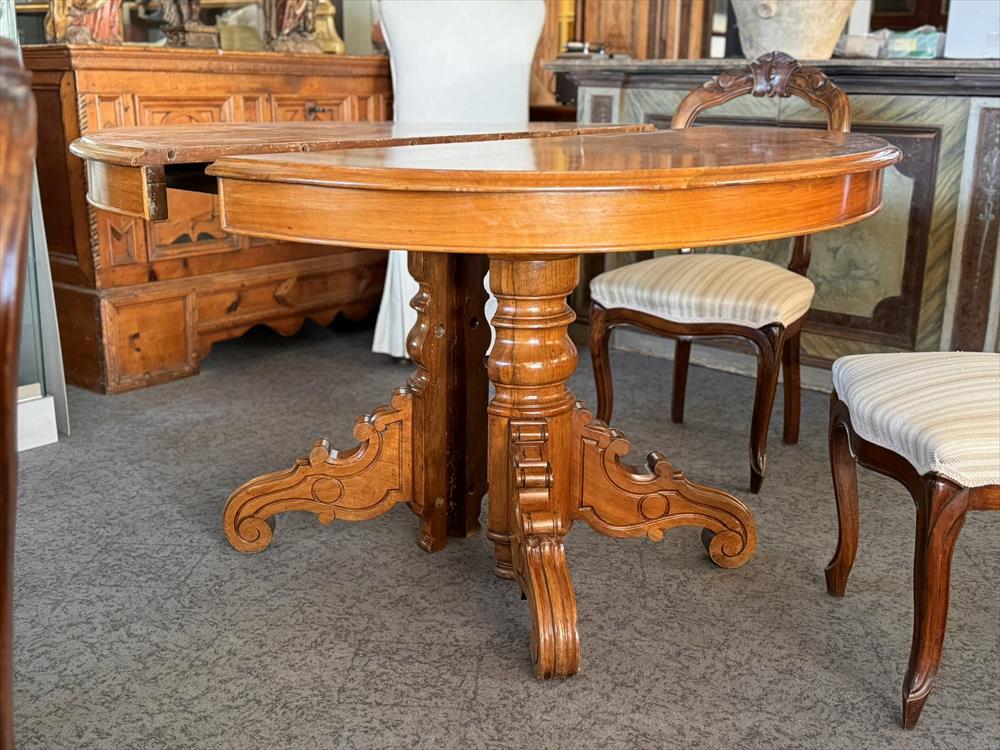
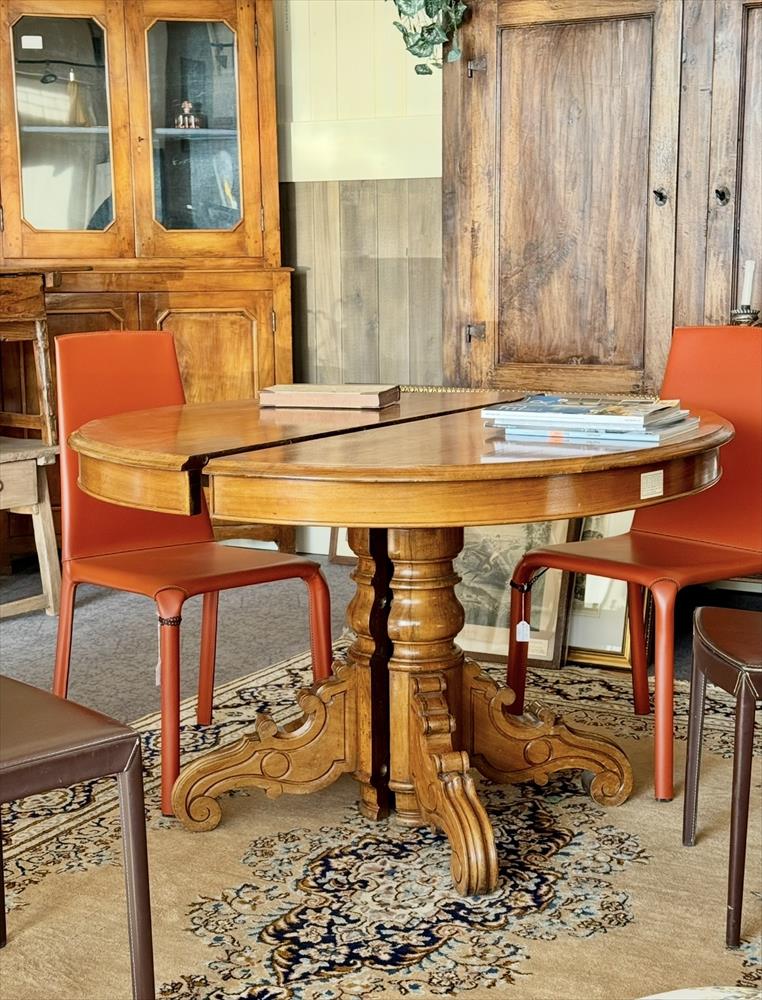
A 19th-century solid walnut dining table, built with real craftsmanship and designed for a home where hospitality mattered.
This oval extending table was made in Northern Italy during the first half of the 19th century, at a time when the dining room was becoming the centre of bourgeois domestic life.
Owning a table like this was not something ordinary. It meant having the space, the means and the culture of receiving guests properly — long lunches, evening gatherings, conversation, wine, music and ceremony around the table.
Made entirely of solid walnut, it features a central turned pedestal resting on four shaped scroll feet.
The design is elegant but restrained, with well-balanced proportions and none of the excess decoration of earlier periods. It clearly comes from a skilled workshop and from a client who valued quality, durability and intelligent construction over display.
Closed, the table remains compact and easy to live with.
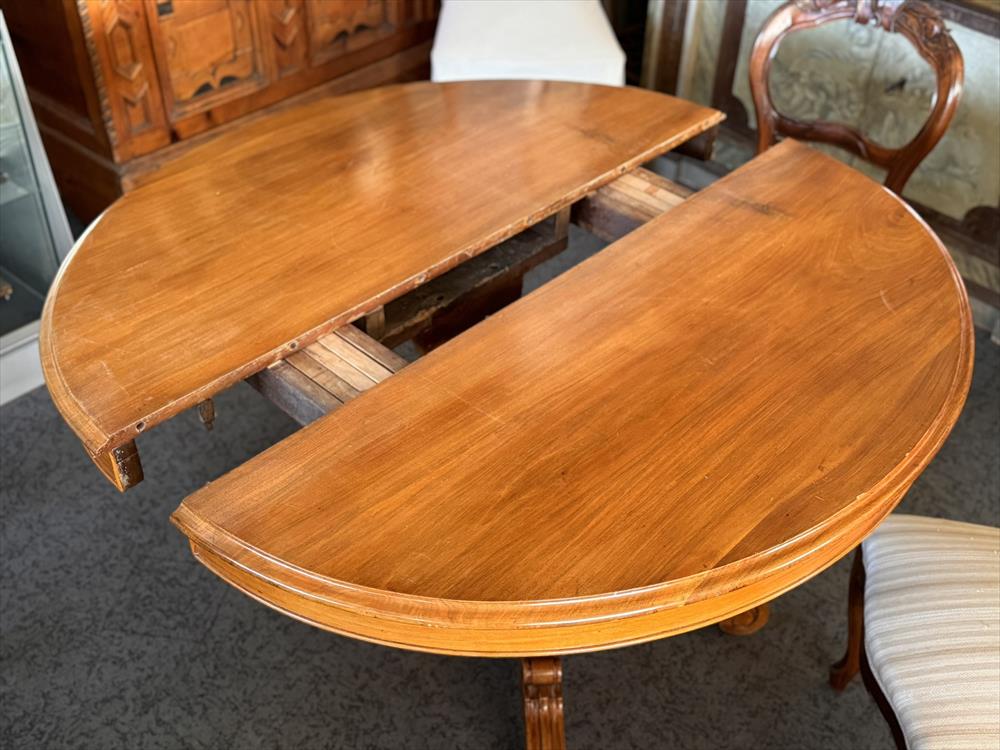
Opened, it completely changes scale and becomes a true reception table, comfortably seating up to 12 or 14 people.
Its strongest feature is the extending mechanism.
Not only does the top open in two halves — the central pedestal divides as well. The entire structure slides outward on internal wooden runners, moving the support points beneath the extension leaves. That is what allows the table to remain remarkably stable even at its full length.
This is still a fully hand-built 19th-century mechanism, where seasoned timber, accurate joinery and correct proportions were essential for everything to function properly over time.
The central pedestal also leaves plenty of room for seating, making the table particularly comfortable when fully extended.
The oval shape has a practical logic too.
It softens the presence of the table within the room, encourages conversation and allows movement around it more naturally than heavier formal layouts.
The walnut is of very good quality: dense, warm and beautifully figured.
Its surface has developed a deep natural patina over time, with the kind of glow only age and real use can create.
The base is one of the finest parts of the piece.
Strong, well turned and genuinely built to support weight. Even the four shaped feet are not simply decorative — they help distribute the load of the extended top and keep the whole structure firm and balanced.
The quality here is immediately visible.
Good timber, solid construction and a well-designed extending system. This is the kind of table that becomes more convincing the more it is used.
The extension leaves were remade during restoration, while the rest of the table remains original.
The restoration itself was conservative and respectful of the original material.
Today the table is structurally solid, reliable and fully ready for everyday use again.
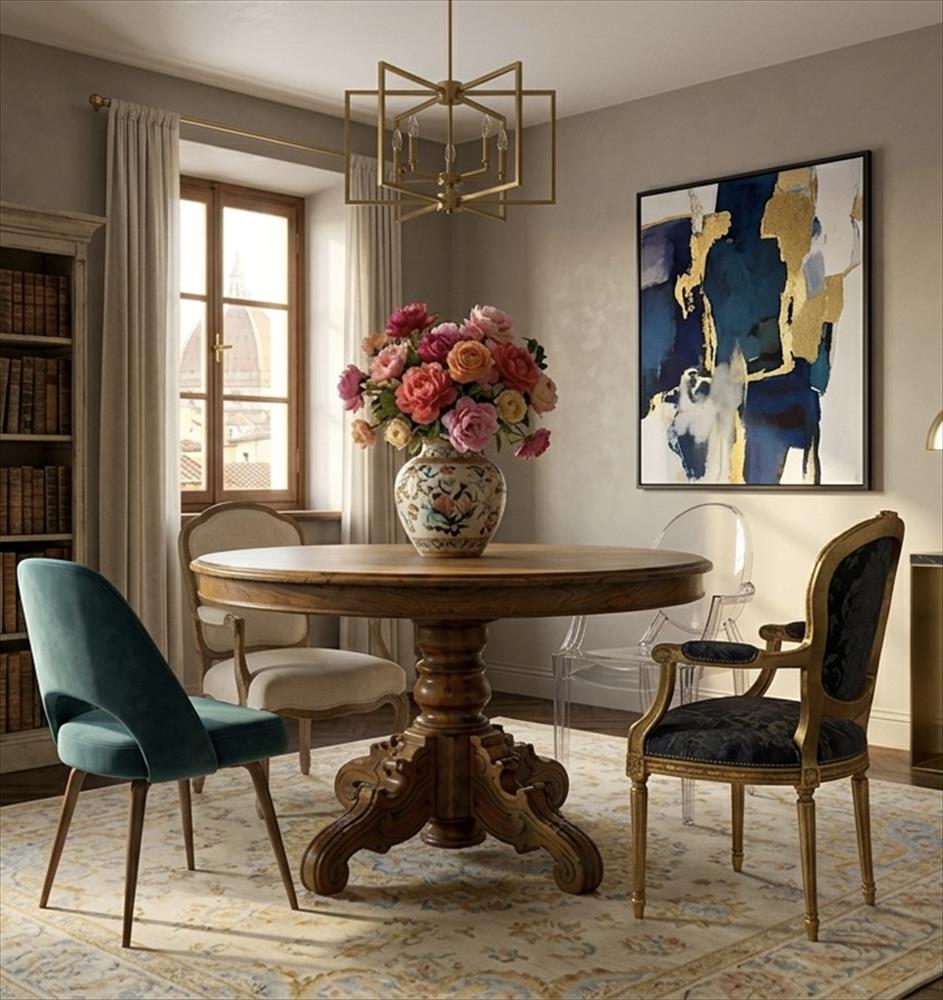
It works particularly well in contemporary interiors because it combines presence with practicality.
Closed, it stays discreet; opened, it naturally becomes the centre of the room.
This is not a table that relies on decoration to impress.
Its value lies in the quality of the walnut, the intelligence of its construction and in that very 19th-century idea of the home: welcoming, substantial and made to bring people together.
They survived time by deserving to survive.
They carry memory and truth with them.
Our work is to recognise them and help them continue.
- Material: Solid walnut wood
- Size: cm 130 x 116/280 x 78 h
- Condition: Restored
- Period: First half of the 19th century
- Style: Charles X
- State: Optimal conditions