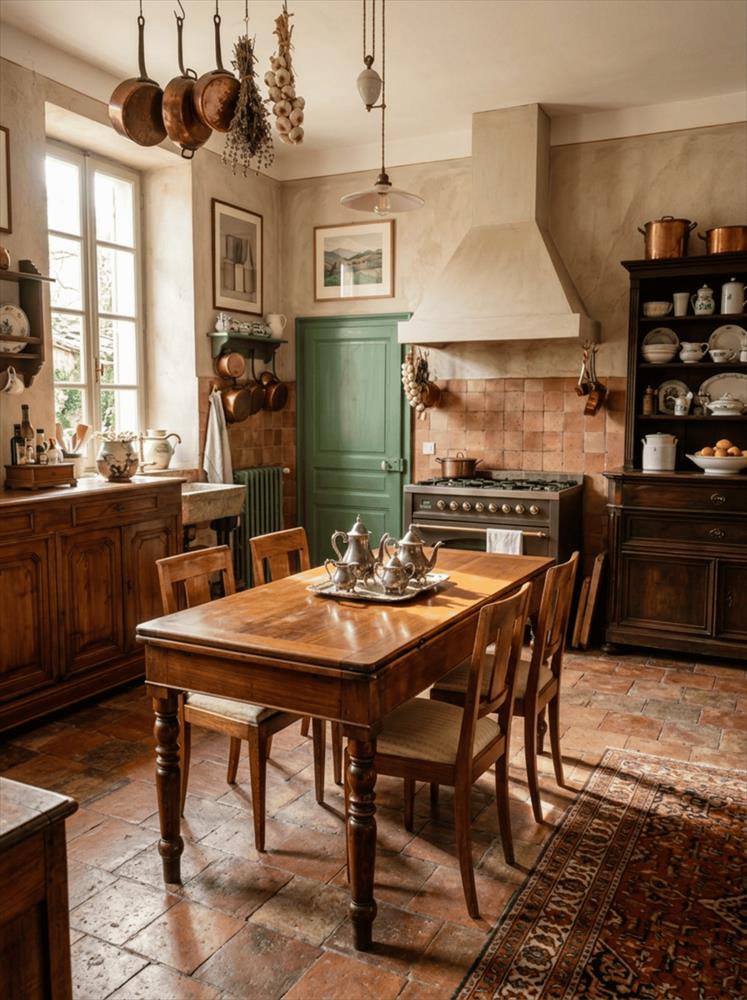
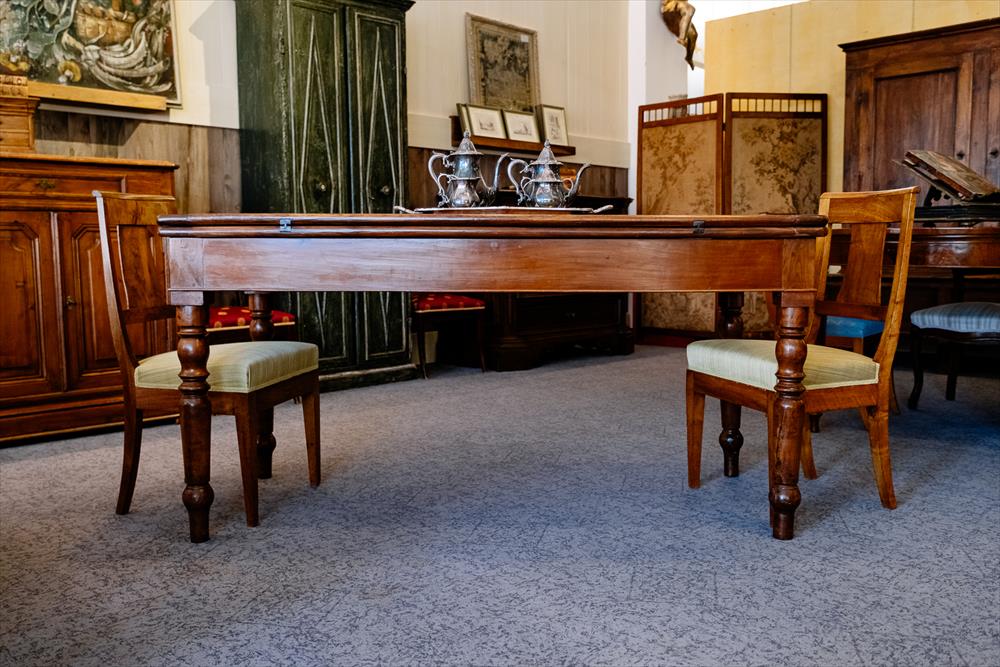
A traditional kitchen and dining table, made to be used every day, at the center of daily life.
It originates in Piedmont, in the first half of the 19th century, within the context of the Langhe: hills, vineyards, farmhouses, and a grounded, well-organized rural culture where furniture was made to function and endure rather than to decorate.
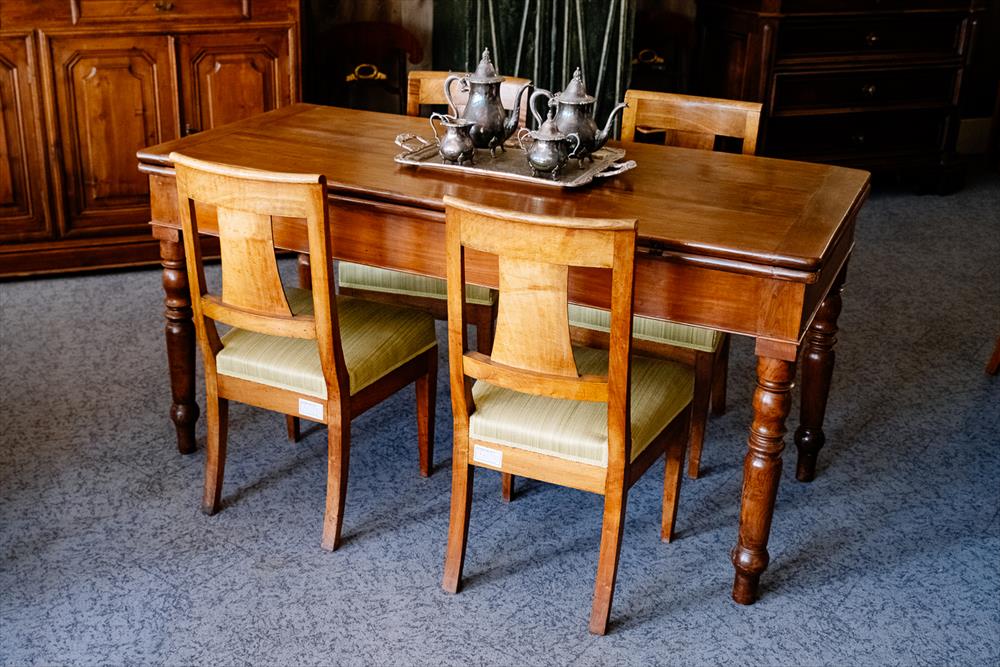
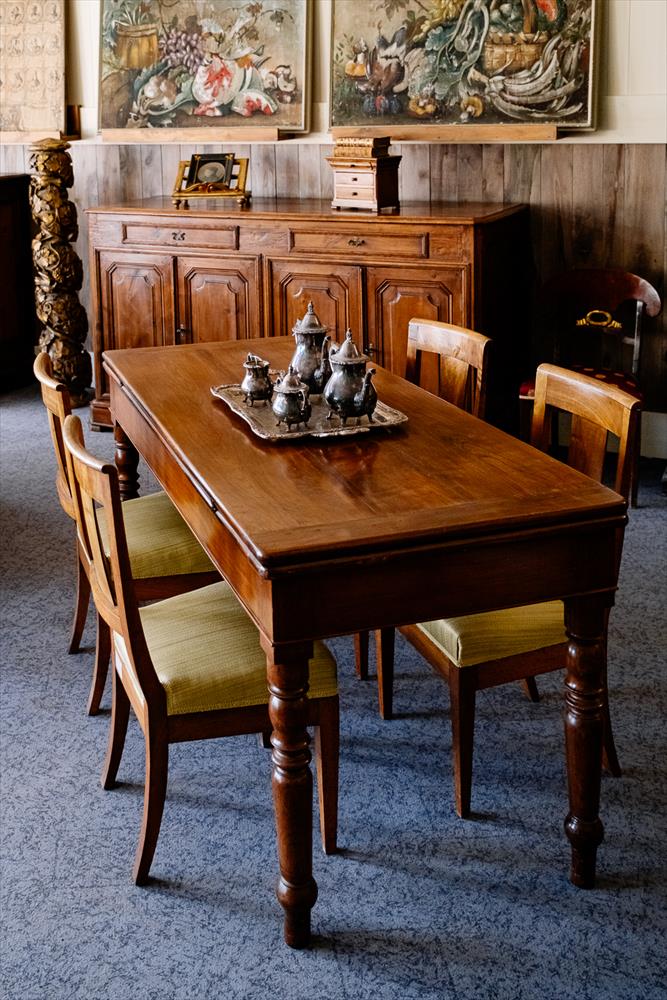
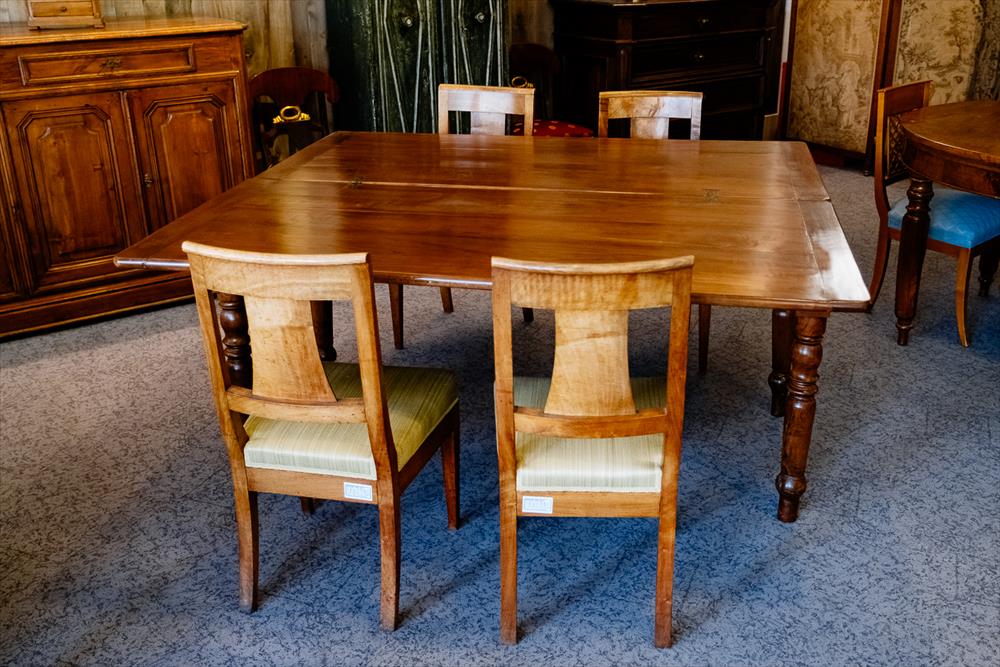
It is a piece of good craftsmanship, built as it should be: well-balanced proportions, carefully selected wood, firmly anchored legs.
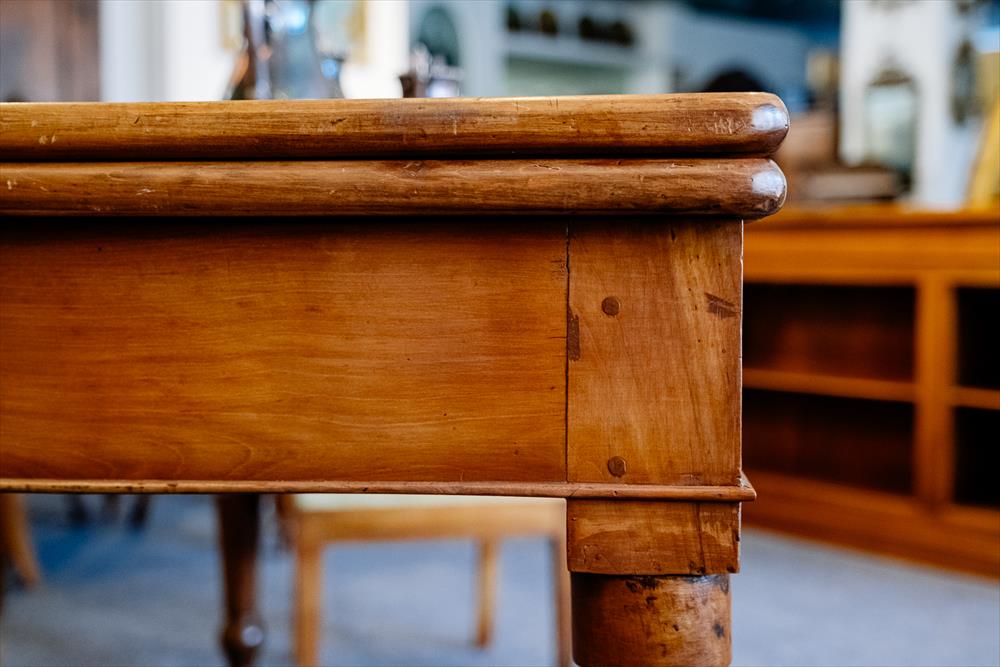
The material is solid cherry wood, with a warm and deep patina developed over time through use and exposure to light.
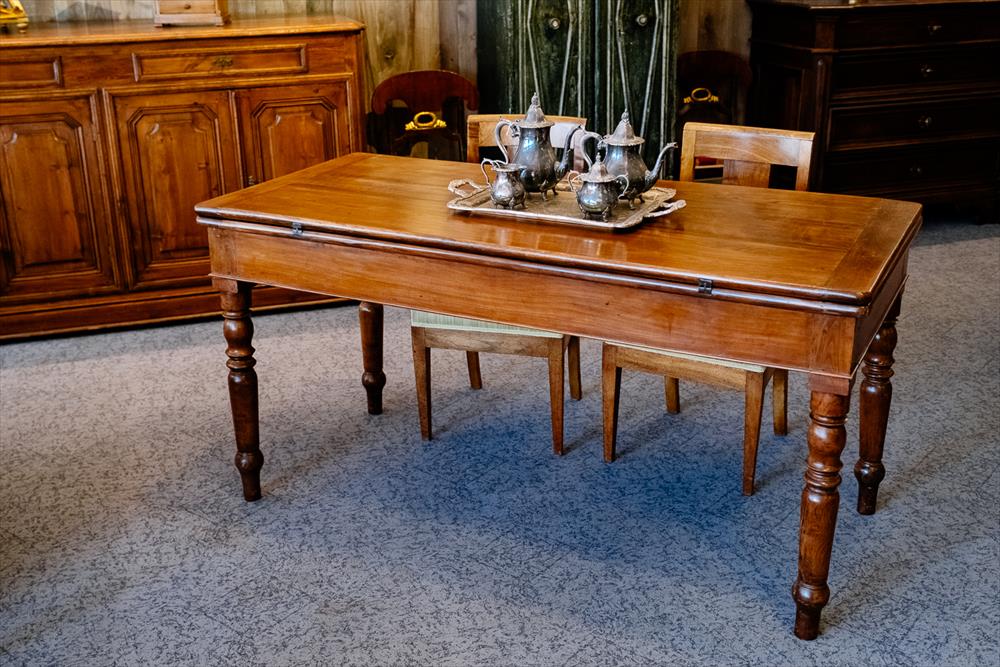
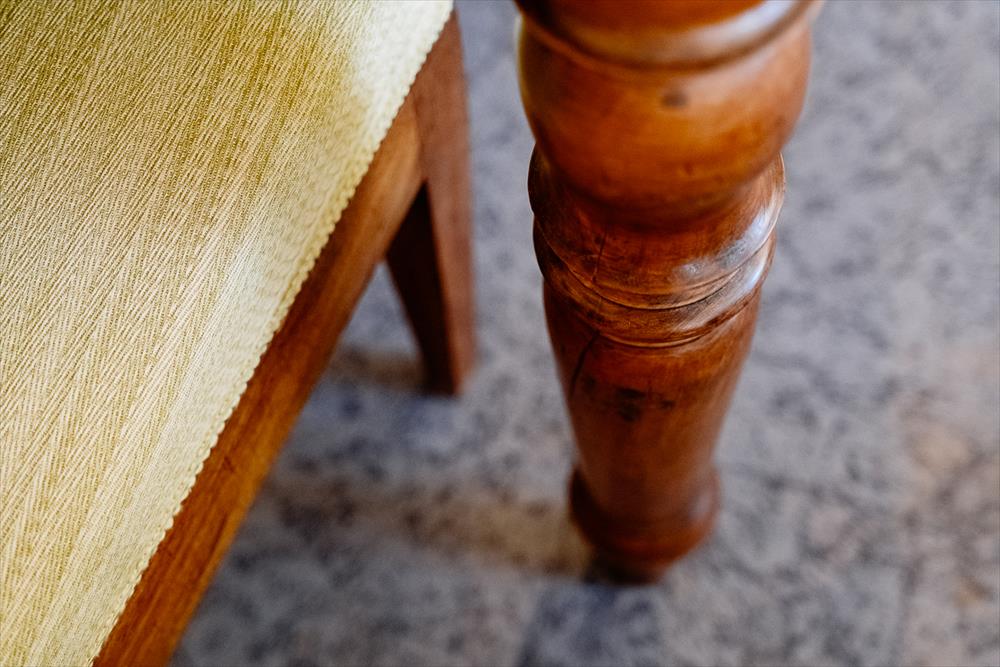
The legs show a profile typical of the transition between the Charles X and Louis Philippe styles (around 1825–1835): a turning that lightens the overall volume while holding weight and ensuring stability.
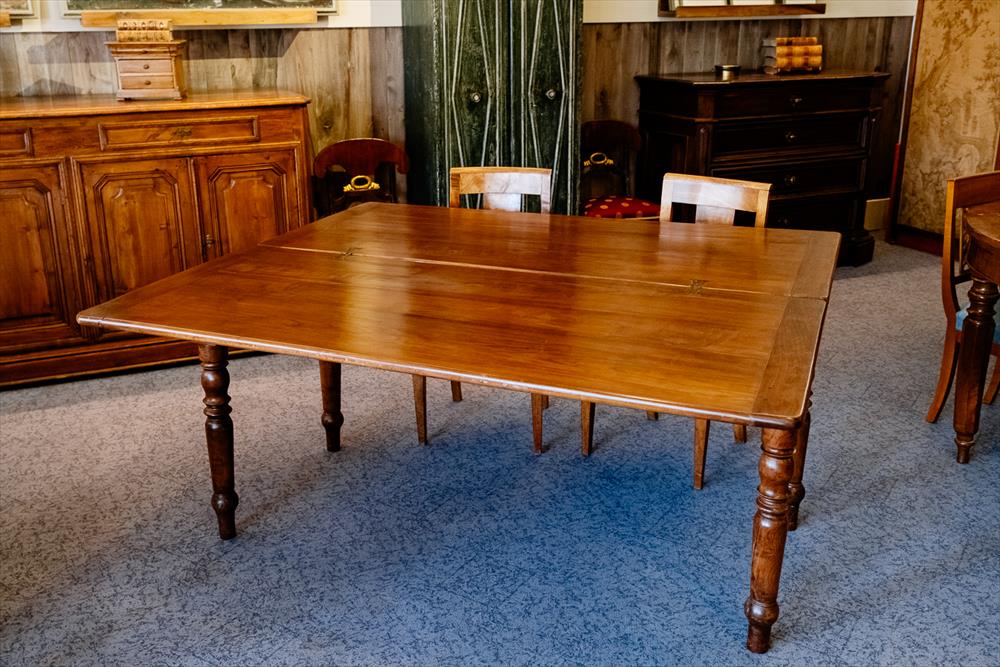
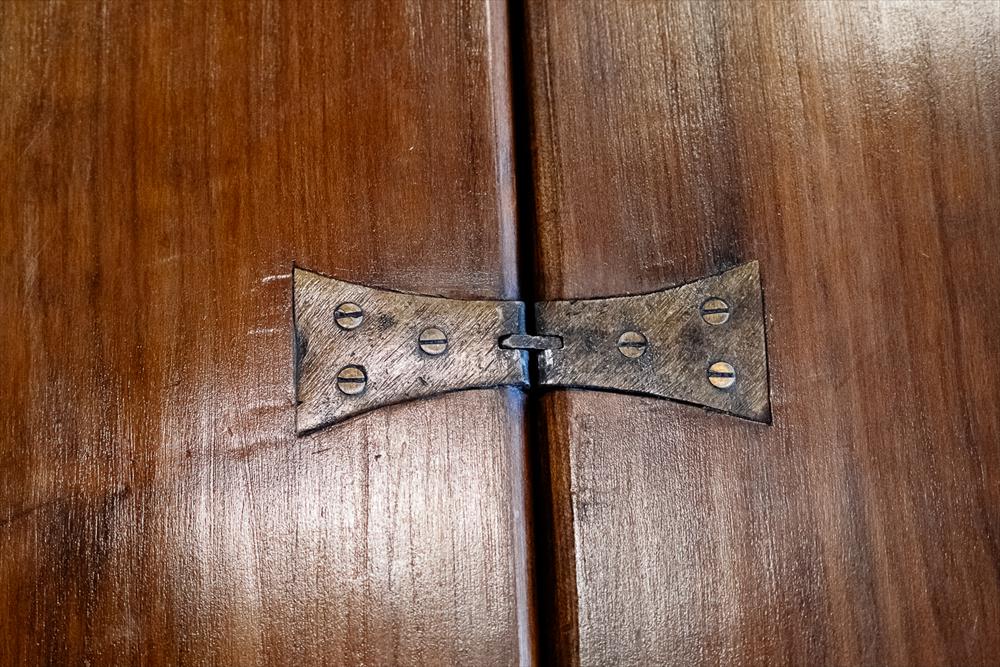
The top, the most important part, is of good thickness and well preserved, used but not mistreated. It is made of two leaves and opens like a book, a traditional folding-top system typical of rural Northern Italian tables.
Closed, it is a compact rectangular table; open, it becomes a large square. The arrangement changes: people sit face to face, conversation flows, and the space is shared directly. It is the table of the moment when the family would gather after returning from work.
Underneath, there is a storage compartment, useful for keeping table linens, dishes, and everyday essentials.
The restoration has been light: structural consolidation, cleaning, and a finish with shellac applied by pad and wax, to protect the original patina.
The table is structurally sound, free from woodworm, and well preserved, a sign that it has always been kept in healthy environments.
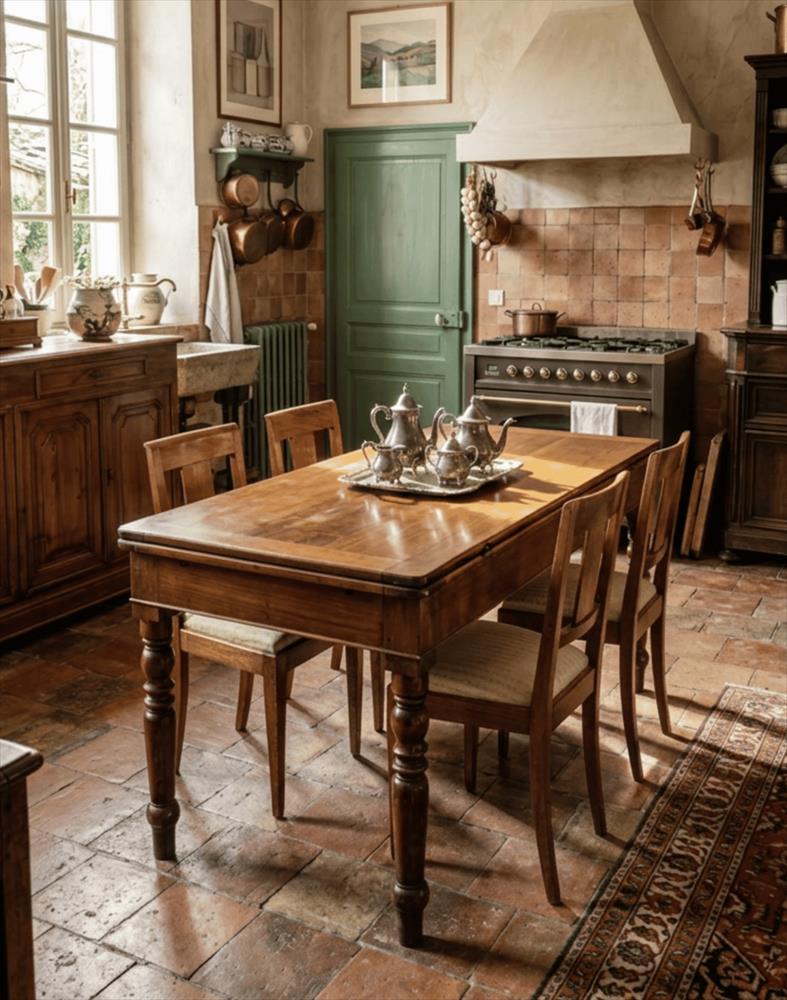
It belongs in spaces where attention matters: an important kitchen, a contemporary dining area, a well-kept country house. It does not simply furnish — it brings material and presence, a focal point around which the space organizes itself.
It is a solid, well-made 19th-century Italian table, built for daily use. It was not made to be replaced.
You eat at it, gather people around it, open it when needed, close it when space changes. It stays there, and it works.
It is one of those pieces that remain.
They have survived time, earning the right to remain.
They carry memory and truth.
Our work is to recognize them and allow them to continue.
 it
it