it
it
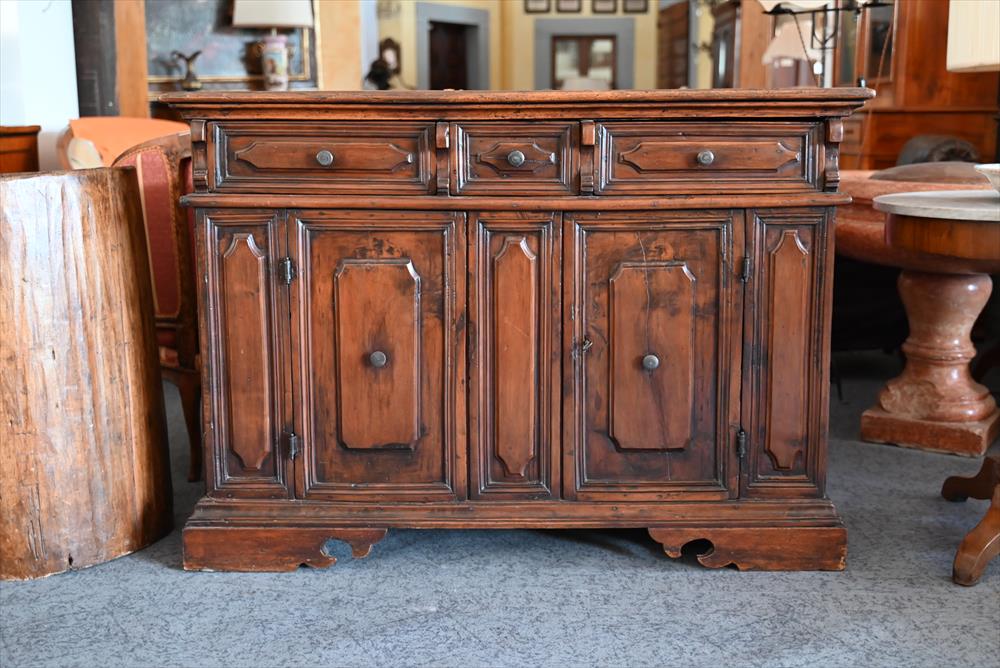
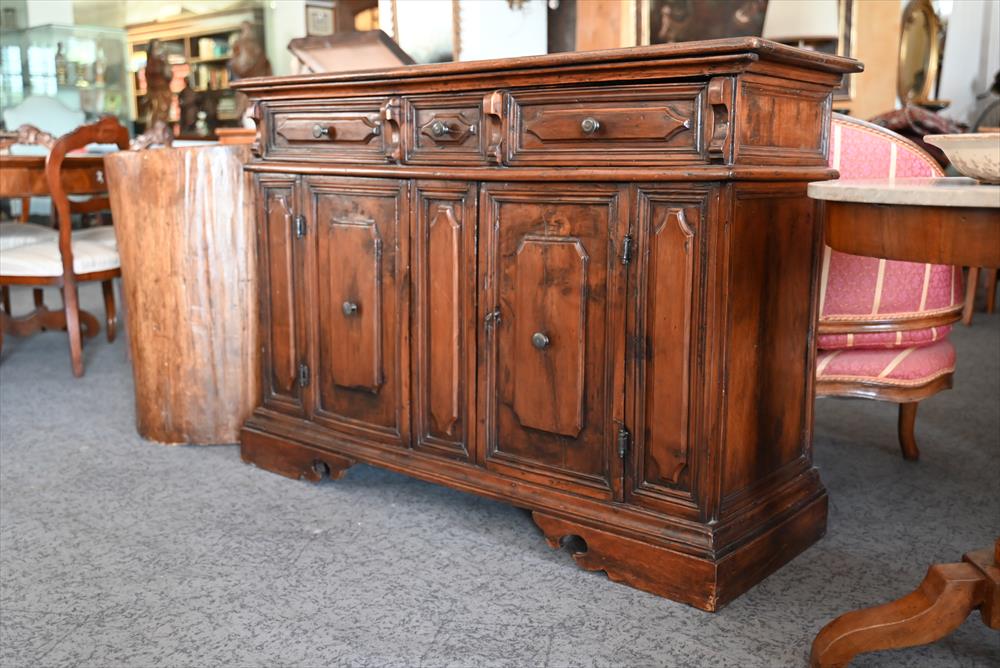
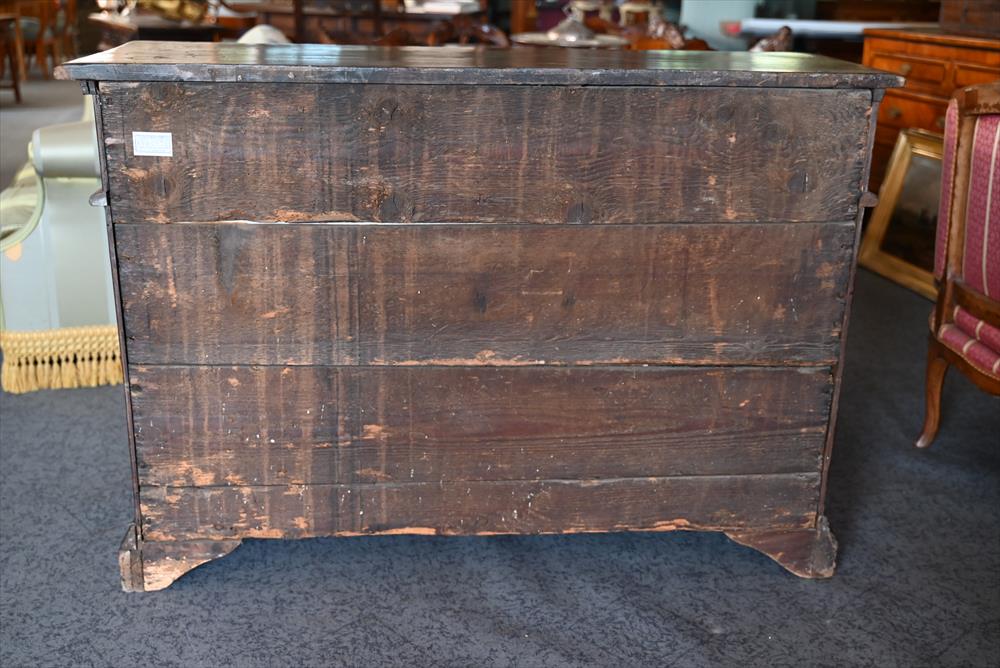
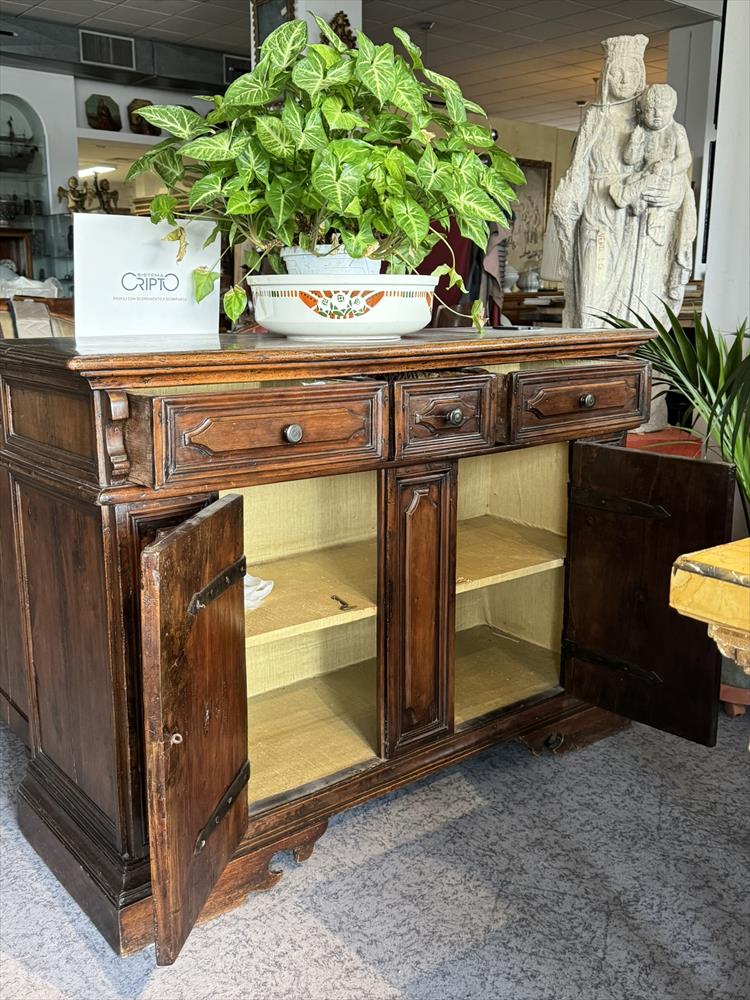
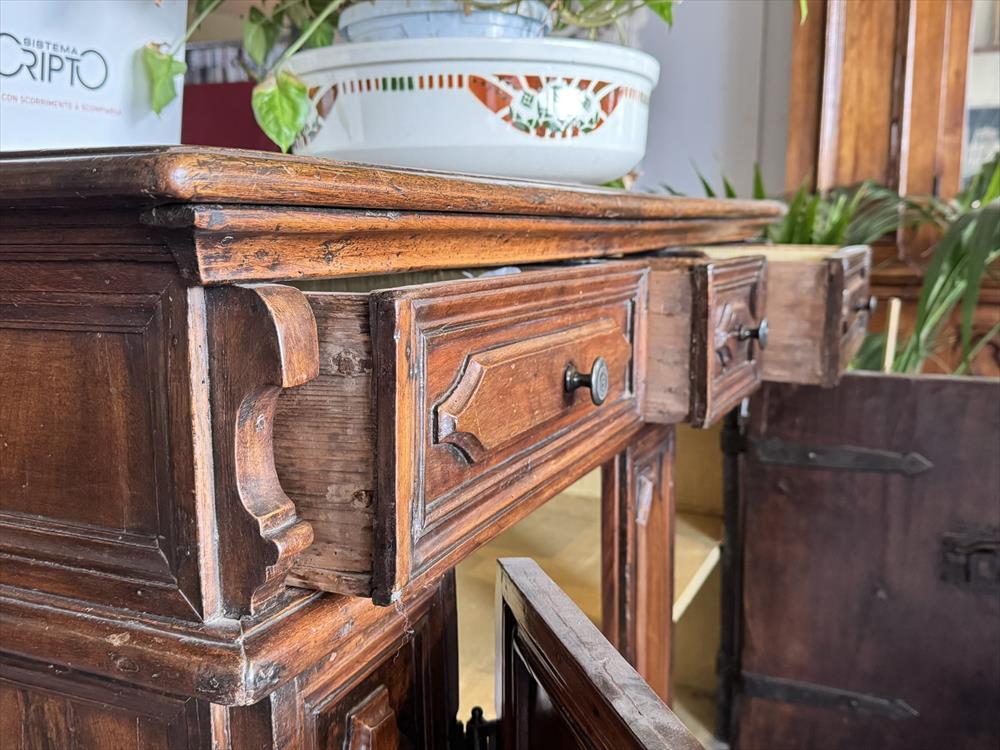
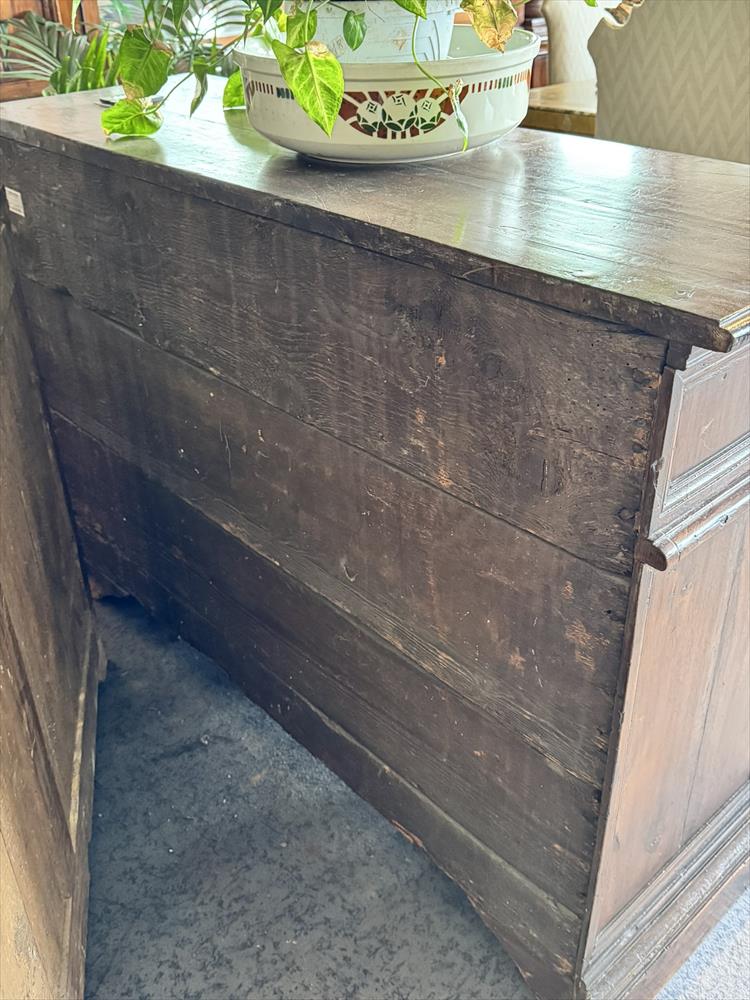
Solid walnut sideboard from the Tuscan-Emilian region, crafted between the late 17th and early 18th centuries.
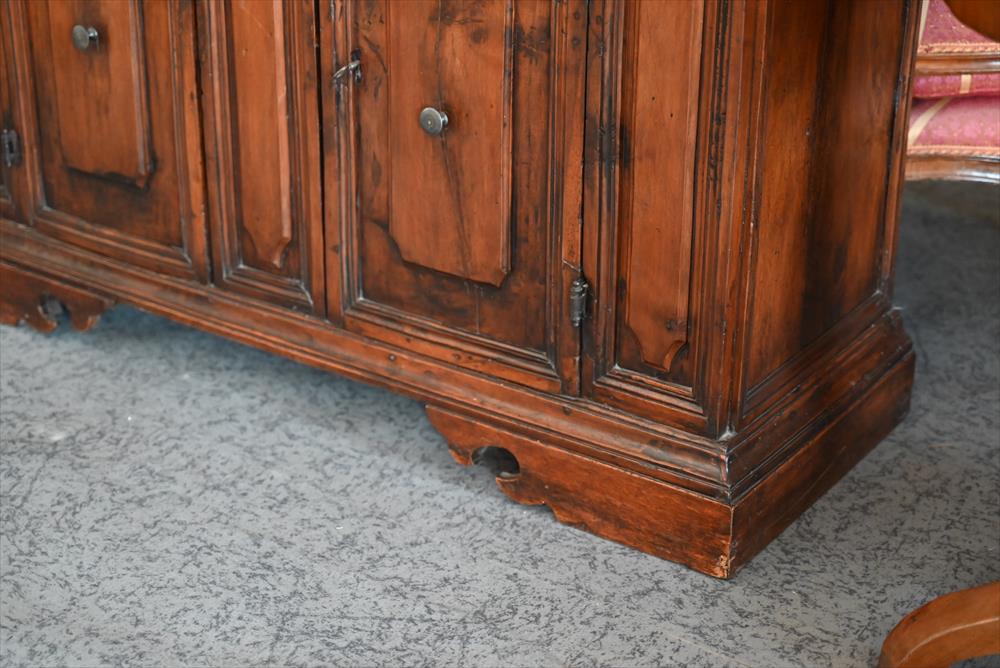
The appeal of this sideboard lies not in elaborate decoration, but in the quality of its architectural structure. Well-balanced proportions, crisp profiles, moulded frames and panelled surfaces shape the volume with order and restraint, reflecting the sober interpretation of the Louis XIV style developed by the workshops of the Tuscan–Emilian region.
In the seventeenth century, the cabinetmaker worked almost like an architect: proportion came before decoration. This is one of the reasons why furniture of this period still possesses a balance that feels remarkably at home in contemporary interiors.
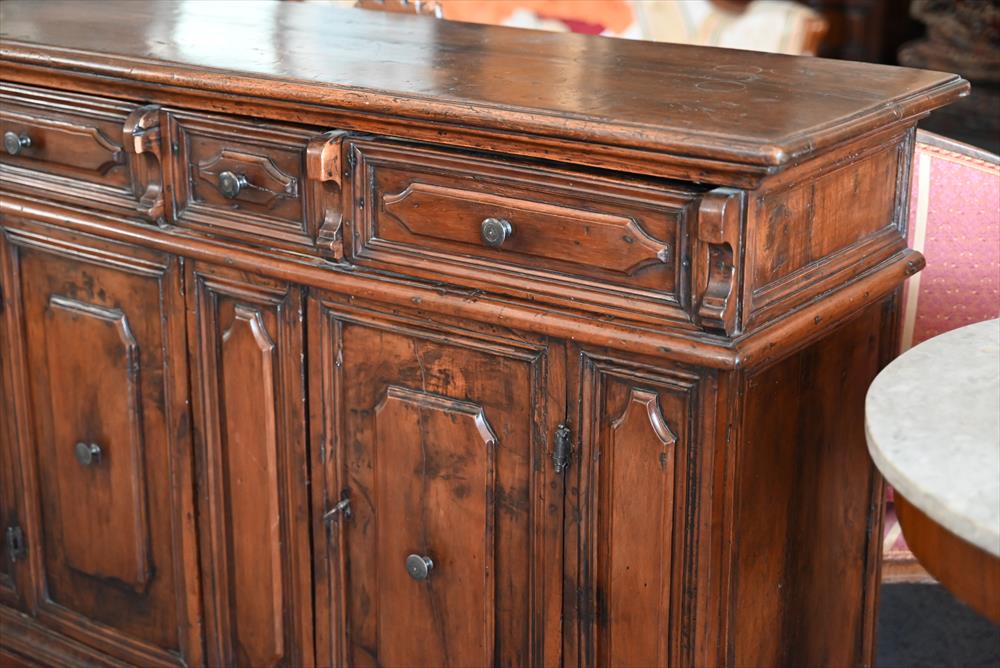
The front reflects this same search for equilibrium. Three fixed pilasters articulate the composition; the upper section contains three drawers, the central one slightly smaller, while two doors occupy the lower section. Nothing is accidental: every element contributes both to the rhythm of the façade and to the practical organisation of the interior. It is a way of designing in which function and aesthetics are inseparable.
Even the name tells part of its story. The Italian word credenza is traditionally associated with the custom of giving credence to food by tasting it before it was served, as proof of its quality and safety. From this practice, the name eventually came to identify the piece of furniture used for table service.
The true quality of the cabinet becomes evident where one does not usually look. The back still retains its original old boards, while the interior reveals solid walnut construction and traditional workmanship designed for strength and longevity. These details tell the story of the piece far more than any decorative carving ever could.
Solid walnut gives the cabinet its character. Its rich grain, naturally matured patina and subtle tonal variations bring warmth to an otherwise disciplined architectural composition without diminishing its sobriety. These traces of time are what make every antique unique.
With a compact depth of just 47 cm, it offers generous storage without becoming intrusive. Today it works equally well as a dining-room sideboard, an entrance-hall cabinet or a living-room storage piece, integrating naturally into both period settings and contemporary interiors.
Fashions change. Good proportions endure.
- Material: solid walnut wood
- Size: cm 142 x 47 x 99 (H)
- Condition: Restored
- Period: Late 17th century /Early 18th century
- Style: Louis XIV
- State: Optimal conditions